UAE Calls for End to Gaza War, Urges Stability Restoration
 Layla Al Mansoori
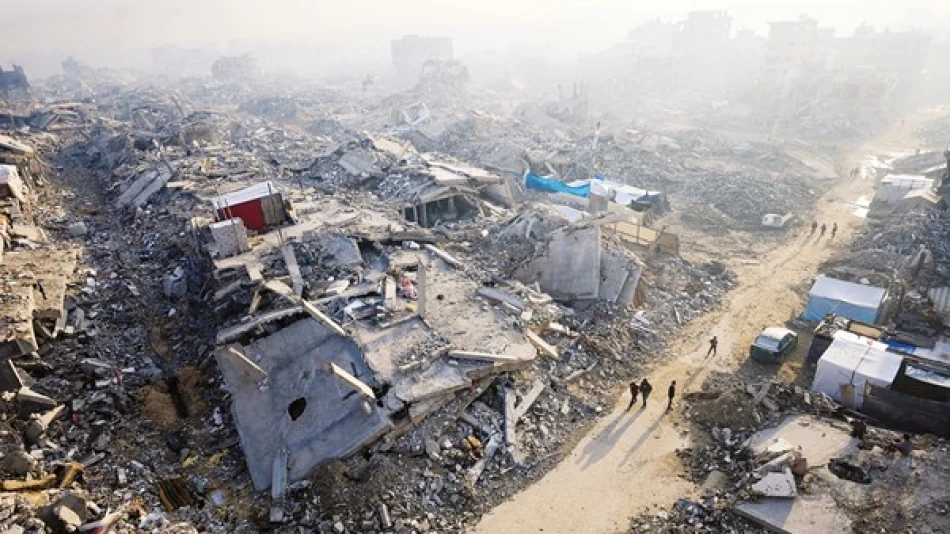
The UAE is pushing hard for immediate action on the second phase of the Gaza peace agreement, calling for full Israeli withdrawal, reconstruction efforts, and an end to forced displacement. Speaking at the UN, the Emirates stressed that after more than two years of devastating war, Gaza civilians still face an unprecedented humanitarian crisis with severe shortages of basic supplies.
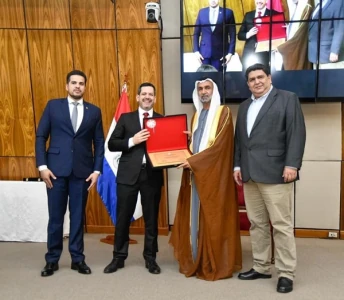
Sheikh Mohammed bin Khalifa bin Mohammed Al Nahyan, advisor at the UAE's UN mission, delivered the statement during a general UN discussion on Israeli practices and settlement activities. He welcomed the results of the Sharm el-Sheikh summit and the launch of President Trump's peace plan implementation phases, but emphasized that much work remains.
The UAE wants to see the first phase completed, including the return of remaining bodies and release of detainees. But they're also pushing for urgent humanitarian aid access through all crossings without obstacles. With winter setting in, hundreds of thousands of families are facing harsh cold and heavy rains that have swept through their tents, with no basic protection available.
The second phase demands are significant: complete Israeli withdrawal, stopping annexation and forced displacement, and starting dialogue to create a political path toward lasting peace. The UAE welcomed UN Security Council Resolution 2803, which supports the comprehensive plan to end the Gaza conflict, and thanked the US for leading this effort.
But the UAE didn't limit its criticism to Gaza. The statement condemned ongoing Israeli violations in the occupied West Bank, including repeated raids on Al-Aqsa Mosque courtyards and provocations against worshippers. They specifically mentioned a recent Israeli attack on a mosque in the Palestinian village of Kafr Haris, warning these actions threaten more tension and escalation in the region.
The Emirates emphasized respecting Jordan's role in caring for holy sites and endowments under international law and the existing historical status. They also condemned settler violence and terrorism, including recent attacks on farmers during olive harvest season.
The UAE firmly rejected continued illegal settlement activities and Palestinian land seizures. They specifically opposed two bills approved by the Israeli Knesset aimed at imposing so-called "Israeli sovereignty" over the occupied West Bank and illegal colonial settlements, calling this a violation of international law and relevant Security Council resolutions.
The statement reaffirmed the UAE's absolute rejection of any annexation attempts, saying this would completely destroy the foundations of the two-state solution. They also demanded an end to Israeli expansion and control over lands in southern Lebanon, violating Resolution 1701, and repeated attacks on Syrian territory.
The UAE made clear that the Golan Heights remain occupied Syrian Arab land, and all Israeli measures there are null and void with no legal effect, according to Security Council Resolution 497.
Here's what the UAE wants to see happen: an end to the Gaza war and achieving stability, stopping settlement expansion and settler attacks, and ending all attempts to impose facts on the ground in the West Bank. They're calling on the international community to strengthen regional and international efforts to find a permanent, just, and comprehensive solution to the Palestinian issue based on the two-state solution, leading to an independent, sovereign Palestinian state with East Jerusalem as its capital.
This statement shows the UAE taking a more assertive diplomatic stance on Palestinian issues, balancing its regional relationships while pushing for concrete steps toward peace. The timing coincides with renewed international attention on Gaza reconstruction and the broader Middle East peace process.