UAE and South Korea Issue Joint Statement on Bilateral Cooperation
 Sara Khaled
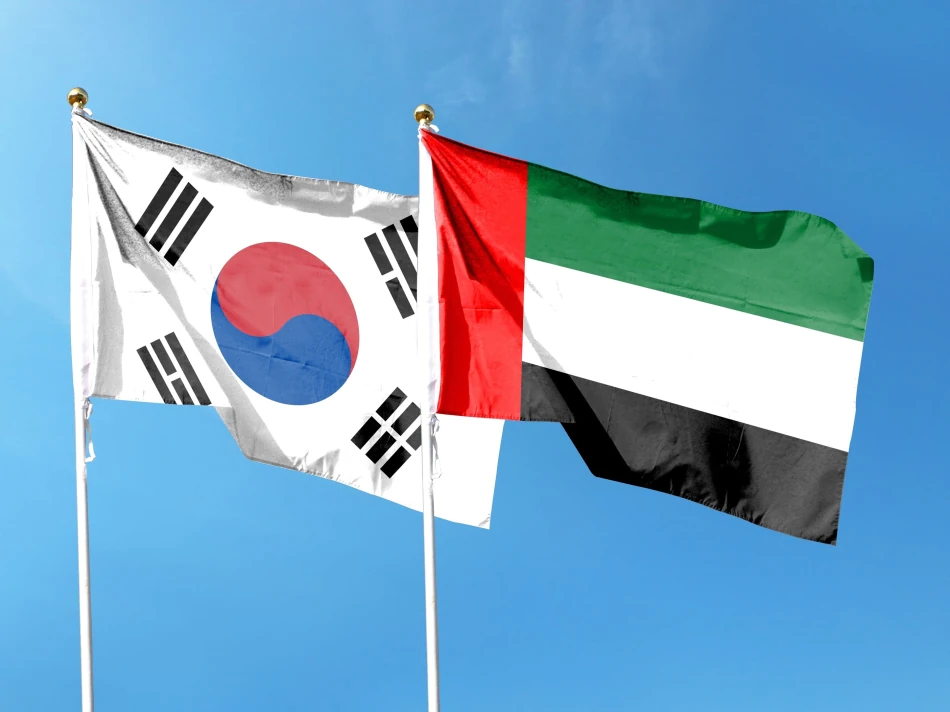
UAE President Sheikh Mohamed bin Zayed Al Nahyan and South Korean President Lee Jae-myung met at Qasr Al-Watan in Abu Dhabi on Tuesday, announcing plans to deepen their strategic partnership across multiple sectors including artificial intelligence, nuclear energy, defense technology, and space exploration. The meeting builds on a relationship that started in 1980 and has grown significantly since the landmark Barakah nuclear project began in 2009.
Both leaders praised how quickly cooperation has expanded between their countries. The partnership now covers energy, construction, infrastructure, trade, investment, defense, space technology, healthcare, agriculture, and education. What started as basic diplomatic ties has become one of the most comprehensive partnerships in the Middle East-Asia region.
The space sector shows how deep this cooperation goes. Over two decades, the countries have worked together on multiple satellite projects. The latest is the "Etihad-Sat" radar satellite, developed with South Korean company Satrec Initiative in 2025. Earlier successes include the DubaiSat-1 and DubaiSat-2 satellites, plus South Korea hosting environmental tests for KhalifaSat, the first satellite developed entirely within the UAE.
AI and Technology Push
Both countries plan to focus heavily on artificial intelligence and semiconductor cooperation. They want to create joint AI data centers that use both countries' energy resources. The partnership will also develop AI-powered port systems using digital twin technology and physical AI applications.
A new high-level ministerial dialogue will handle AI governance and cybersecurity cooperation. This aims to make semiconductor supply chains more resilient while advancing joint AI development efforts.
Nuclear Energy Expansion
The Barakah nuclear power plant remains the cornerstone of UAE-South Korea cooperation. Both sides committed to expanding this partnership beyond just operations. They plan to work together on nuclear fuel, maintenance, and digital transformation to make Barakah more efficient and stable.
The "Barakah Model" could become a template for entering global nuclear markets together. Both countries want to support clean energy goals worldwide and develop next-generation nuclear technologies enhanced by AI to improve power plant efficiency.
Defense and Healthcare Partnerships
Defense cooperation will expand to include joint production, technical development, and knowledge transfer. Both countries emphasized building sustainable national defense capabilities through shared expertise and local production.
Healthcare represents a major growth area. The UAE sends more patients to South Korea for treatment than any other Middle Eastern country. Six Korean medical institutions already operate in the UAE. Plans include creating a comprehensive Korean medical complex for joint research and investment in pharmaceuticals, digital medical devices, and regenerative medicine.
Cultural and Economic Integration
The partnership extends beyond technology and defense. Both countries want to boost cultural exchange, building on growing interest in Korean culture across the Middle East. They're exploring an innovative "UAE K-City" project that would combine Korean culture, food, business, and talent in one location.
This cultural hub could serve as a launching pad for expansion into other Middle Eastern, African, and European markets. The project reflects how both countries see cultural ties as essential for long-term economic cooperation.
To manage this expanded partnership, both sides will appoint high-level officials to coordinate efforts. A joint working group between the UAE and South Korean foreign ministries will ensure agreements get implemented quickly. Regular meetings will deepen the strategic partnership and maintain momentum.
The timing aligns with the UAE's Vision 2071, which aims to make the country one of the world's best by 2071. South Korea positions itself as a reliable partner with the long-term vision needed to support these ambitious goals. Both countries see this partnership extending well into the next century, built on mutual trust and shared prosperity.