Trump Moves to Designate Muslim Brotherhood Affiliates as Terrorist Groups
 Layla Al Mansoori
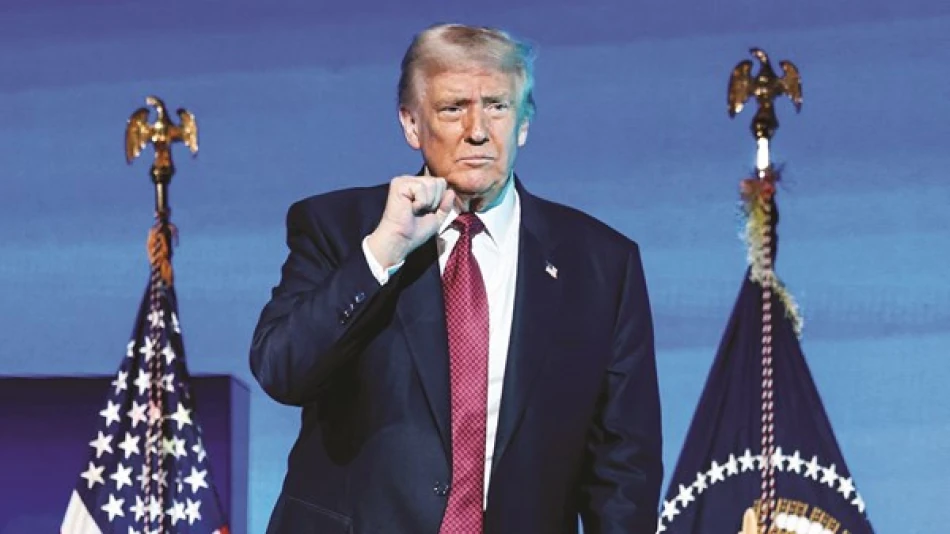
President Donald Trump signed an executive order yesterday to begin classifying certain branches of the Muslim Brotherhood as "foreign terrorist organizations." The order specifically targets Brotherhood branches in Lebanon, Egypt, and Jordan, accusing them of committing or facilitating violence and destabilization campaigns that harm their regions and U.S. interests.
The executive order marks a significant shift in U.S. policy toward the Muslim Brotherhood, a group that has operated across the Middle East for decades. Several Arab countries, including Egypt, Saudi Arabia, and the UAE, have already designated the Brotherhood as a terrorist organization, but this would be the first time the United States takes such a step.
**Why This Matters Now**
Experts say Trump's current political position makes this move more feasible than before. With Republican majorities in both the House and Senate, he has the legislative support needed to push through such decisions. The timing also reflects growing international pressure on the Brotherhood, with European countries like France, Germany, Austria, and Sweden already implementing restrictions on the group's activities.
Munir Adib, a researcher specializing in extremist movements, told reporters this could be a real turning point for the Brotherhood's future. The impact won't stay limited to the United States - it will likely spread to Europe and the Middle East. Removing American protection from the Brotherhood and its affiliated organizations would significantly weaken the group and undermine its presence globally.
**Financial and Political Consequences**
The designation would hit the Brotherhood where it hurts most: funding. Terrorist classifications typically freeze assets, block financial transactions, and make it illegal for Americans to provide material support to designated groups. This could severely impact Brotherhood operations, especially in places like London, which hosts significant Brotherhood presence.
The ripple effects could extend beyond the organization itself. Washington may also target countries that have supported the Brotherhood politically or financially, meaning the confrontation could expand to include the group's support networks and backers.
**Implementation Challenges**
But the process isn't straightforward. Amro Farouk, a researcher on fundamentalist groups and regional security, points out several bureaucratic hurdles. The designation requires approval from multiple agencies including the State Department, Treasury, CIA, federal administration, and Congress. It also needs judicial review before being published in the federal register.
There's another complication: the Brotherhood doesn't officially exist as "the Muslim Brotherhood" in the United States. Instead, it operates through legally registered institutions that don't carry Brotherhood branding. This means the classification might target organizations that are ideologically aligned with the Brotherhood project rather than formal branches.
**Regional Impact**
The move comes as Middle Eastern countries have already been pushing back against the Brotherhood for years. The U.S. decision could encourage other nations to follow suit, especially given the growing popular and official rejection of the group across the Arab world.
Islam al-Katani, a researcher on Islamic movements, says the Brotherhood has been used as a tool to destabilize the region for decades. If implemented, this decision could have serious consequences for the group's future, potentially ending it both ideologically and organizationally.
The executive order represents more than just a policy shift - it signals a broader realignment in how the U.S. approaches political Islam in the Middle East. For countries that have been fighting the Brotherhood's influence, this could provide important international backing for their efforts.