Qirgash: Muslim Brotherhood Groups Cannot Dictate Sudan's Future
 Layla Al Mansoori
UAE's top diplomat says violent extremist groups linked to the Muslim Brotherhood cannot determine Sudan's future, as fighting between Sudan's army and the Rapid Support Forces continues to devastate the country. The comments came during talks with a US envoy as both nations push for an end to the conflict that has created one of the world's worst humanitarian crises.
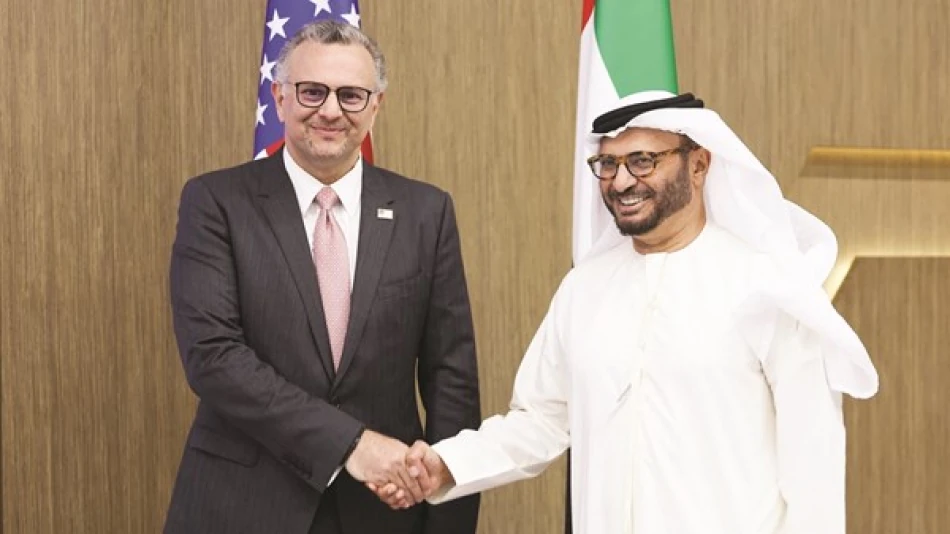
Dr. Anwar Gargash, diplomatic advisor to the UAE president, made the remarks during a press conference in Abu Dhabi with Masaad Poulus, President Trump's envoy to Africa. Both officials condemned atrocities committed by Sudan's military and the paramilitary Rapid Support Forces.
"There is no military solution to the war in Sudan," Gargash said. He welcomed US leadership in efforts to end the violence but stressed that false claims and misinformation won't stop the UAE from working with regional and international partners to end the conflict.
The war has been raging since April 2023, when tensions between Sudan's military leadership and the RSF erupted into open fighting. The conflict has spread from the capital Khartoum to Darfur and other regions, with UN agencies warning of worsening famine conditions.
Poulus revealed that both warring sides have rejected the current ceasefire proposal. He urged them to accept Washington's humanitarian truce plan without preconditions. "We appeal to both parties to accept the humanitarian truce as offered to them without preconditions," he said.
The US envoy emphasized that President Trump considers ending Sudan's war a priority. The new administration has condemned atrocities by both the RSF and Sudan's army, calling for accountability for those responsible.
Just days earlier, the RSF announced a unilateral three-month humanitarian ceasefire. This came after Sudan's military leader Abdel Fattah al-Burhan criticized the international mediation proposal, calling it "the worst so far."
**Diplomatic tensions complicate peace efforts**
Burhan has accused the "Quartet" - which includes the UAE, Saudi Arabia, Egypt, and the United States - of lacking neutrality in mediation efforts. But Poulus dismissed these claims entirely. "He was referring to something that doesn't exist," the US envoy said. "We have no idea what he's talking about."
The diplomatic spat highlights the challenges facing international mediators. Sudan's conflict has drawn in regional powers, with various countries accused of supporting different sides. These competing interests make finding common ground even harder.
Trump announced last week his intention to end the atrocities in Sudan, signaling that his administration will prioritize the crisis. But translating political will into concrete results remains difficult when both warring parties continue to reject ceasefire terms.
The humanitarian situation keeps getting worse. Millions of Sudanese have fled their homes, and aid agencies struggle to reach those in need. Fighting has disrupted food supplies and basic services across much of the country.
For international investors and regional stability, Sudan's collapse represents a significant concern. The country sits at a strategic crossroads between Africa and the Middle East, and its instability affects neighboring countries already dealing with their own challenges.
The UAE's involvement reflects broader Gulf interest in maintaining influence across the Horn of Africa and Red Sea region. But accusations of bias from Sudan's military leadership show how regional rivalries complicate peace efforts, even when all parties claim to want the fighting to stop.