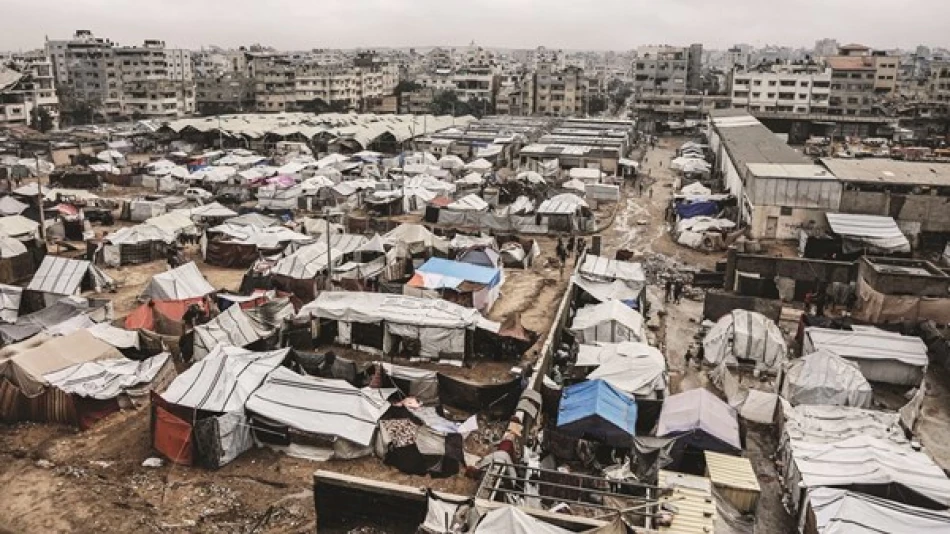
Torrential Downpours Submerge Hundreds of Displaced Persons' Tents in Gaza
 Layla Al Mansoori
Gaza's displaced Palestinians are facing a new crisis as the first winter storm of the year flooded hundreds of tents, leaving families with nowhere to go and destroying their few remaining belongings. This comes more than a month after the ceasefire took effect, but basic living conditions remain catastrophic across the territory.
Gaza's Civil Defense announced that hundreds of tents housing displaced Palestinians were submerged when heavy rains hit the territory Friday morning. The storm brought the first major rainfall of the year, accompanied by thunderstorms and cold air masses that swept across Palestinian territories.
"With the first rainfall in Gaza at dawn on Friday, hundreds of tents were flooded, especially in Gaza City, under catastrophic conditions," said Mahmoud Basal, Civil Defense spokesperson. His teams found tents completely underwater, along with residents' belongings and clothes they had previously salvaged from the rubble of their destroyed homes.
The scale of the housing crisis is staggering. By late September, Gaza's Government Media Office estimated that 93% of tents in the territory were no longer suitable for living - that's 125,000 out of 135,000 total tents. Most of these shelters were damaged during nearly two years of war, either hit directly by strikes or worn down by extreme weather conditions.
The displaced population has few options. "The displaced don't know where to go given the shortage of shelters amid the massive destruction that Israel left over two years of war," Basal said. He warned against people moving into damaged buildings that could collapse during the rains.
But the problems go beyond just housing. Gaza's municipal union warned about 700,000 tons of waste piling up in makeshift dumps across the territory. Local authorities say they can't provide even basic services due to severe fuel shortages and lack of equipment to deal with widespread destruction.
"Municipalities face an impossible equation because of the massive destruction to infrastructure, fuel shortages, and destruction of machinery and equipment during Israel's war," said Alaa al-Batta, deputy head of the municipal union. Despite the ceasefire that began over a month ago, he noted there's been no meaningful improvement in living conditions.
The timing couldn't be worse. Winter weather typically brings more rain and colder temperatures to the region, and the damaged tents offer little protection. Families are stuck between flooded, unusable shelters and potentially dangerous damaged buildings.
This situation highlights how the ceasefire, while stopping active fighting, hasn't addressed the humanitarian crisis facing Gaza's population. The territory's infrastructure remains largely destroyed, and the basic systems needed to support civilian life - from waste management to proper shelter - are still not functioning.