Navigating Travel with Autism: An Extraordinary Adventure Beyond the Ordinary
 Sara Khaled
Traveling with autistic children presents unique challenges that require careful planning and preparation. But families across the UAE are finding that with the right strategies and support, air travel can become a manageable and even positive experience for children on the autism spectrum.
The scene has become more common in recent years: a mother sitting in a quiet airport lounge, explaining the travel plan to her child using printed pictures of the plane, seats, and boarding gate. The child memorizes the sequence of images just like they memorize details of their daily routine at home: "We go to the airport... we wait... we board the plane... we sit... we arrive."
This careful preparation reflects growing awareness about the needs of autistic children during travel. While most children might see flying as an exciting adventure, for autistic children it can trigger a series of sensory and emotional challenges - from airport noise to sudden crowds and disrupted routines.
**Real Family Experiences**
Bushra Lari, mother of 12-year-old Maria Ashkanani, knows these challenges firsthand. She says traveling with her daughter requires extensive advance planning and clear routines to help Maria accept change.
"I make sure to tell my daughter about travel plans well in advance," Lari explains. "I can't just tell her a day or two before the trip. Home represents her safe zone and comfort area. Leaving it, even for a short time, causes her stress and anxiety that requires psychological preparation."
Lari creates detailed daily schedules that cover activities from morning to night, sticking to them as closely as possible. Any sudden changes can raise Maria's stress levels and lead to crying and screaming episodes. So she builds extra flexibility points into the plan to avoid setbacks when the program needs adjusting.
Food presents another challenge. Maria relies on a very limited list of foods, forcing her mother to pack special meals and even liquids during travel. Maria doesn't ask for food on her own - meals must be offered directly for her to eat what suits her.
Crowded places cause Maria obvious stress, making her cling to her mother throughout the trip for security. She also refuses to use bathrooms outside her familiar environment, requiring accompaniment and encouragement.
**Learning Through Each Journey**
Despite the difficulties, Lari sees travel as giving both her and Maria beautiful moments and chances to grow closer. Each trip teaches her something new about understanding her daughter's needs better, making future travel experiences smoother.
Moza Khalifa Al Hameli, mother of Khalifa Al Falasi, shares similar experiences. She says her journey with her son is full of challenges, especially during travel. The experience was difficult and unclear for the family at first, but they gradually overcame those difficulties through cooperation and continuous support.
The Dubai Center for Autism provided the family with important guidelines that greatly improved their travel experience with Khalifa. The center helped them prepare clear trip schedules including travel stops and timing, giving him a sense of security and ability to predict what would happen next.
**Professional Guidance and Support**
Mohammed Al Amadi, Director General of Dubai Center for Autism, emphasizes that supporting families during travel has become part of institutions' responsibilities toward society. Travel isn't just recreational activity, he says, but an educational and social opportunity that should be available to everyone without exception.
The center works to raise awareness among families and service providers to adopt supportive practices through their "Autism-Friendly Environment" program. This aligns with UAE's vision and national agenda aimed at enhancing quality of life and empowering people of determination.
Dr. Nicholas Orland, Executive Director of Programs at the center and certified behavioral analyst, explains the main challenges autistic children face during travel. They encounter completely new sensory environments including loud sounds, unfamiliar security procedures, long waiting lines, routine changes, and rapid transitions between trip stages.
These factors can lead to increased anxiety levels, sensory regulation difficulties, and emotional behaviors due to overstimulation. Some children are affected by strong terminal lighting, while others get stressed by smells or unexpected touching during security screening.
**Practical Preparation Strategies**
Orland recommends relying on advance preparation, which he describes as the foundation of any successful travel experience. Children need to know what will happen, especially through visual aids like picture schedules and event sequence stories.
When a child sees a picture of the airport, followed by a picture of the plane, then the hotel, the day's path becomes understandable instead of a series of disturbing surprises. Training the child at home through simple simulations of waiting or bag searches helps reduce the first encounter inside the airport.
Families should never leave home without a sensory bag, Orland stresses. This isn't just a collection of toys, but a support system including noise-canceling headphones, pressure tools, calming toys, and other familiar sensory materials. These elements help the child restore sensory balance whenever they're exposed to excessive stimulation.
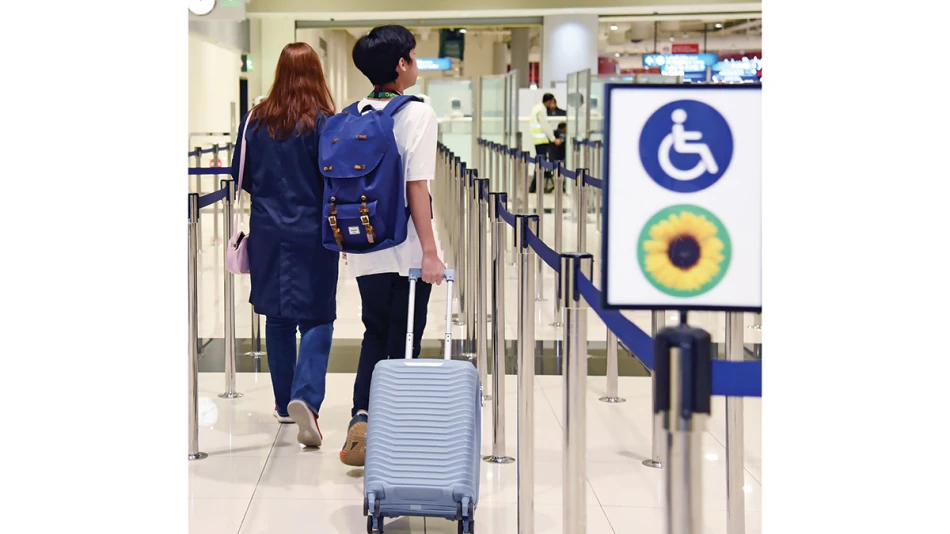
The Dubai Center for Autism works on creating autism-friendly travel environments with specific standards: quiet, low-noise pathways; simplified and quick check-in and boarding procedures; low-stimulation hotel rooms; clear visual guidance signs; and staff trained in supportive communication and understanding sensory behaviors.
Autism affects one in every few hundred children, typically appearing during the first three years of life and lasting throughout all life stages. It impacts communication and social abilities, but with proper preparation and supportive environments, travel can become an enriching experience for autistic children and their families.