US Offers Maduro Exile from Venezuela amid Ongoing Crisis
 Sara Khaled
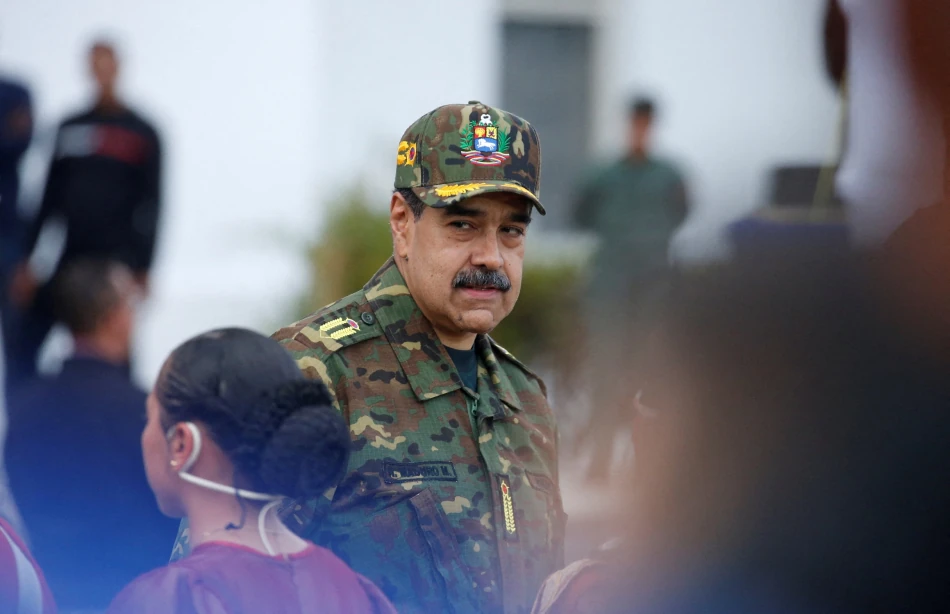
The US has offered Venezuelan President Nicolás Maduro safe passage to Russia or another country as tensions escalate between the two nations. Republican Senator Markwayne Mullin revealed the proposal while Washington deploys military forces off Venezuela's coast, marking a significant escalation in the ongoing dispute over drug trafficking allegations and political legitimacy.
Speaking to CNN on Sunday, the Oklahoma senator said, "By the way, we gave Maduro a chance to leave. We told him he could go to Russia or to another country." Mullin added that the Venezuelan people have also spoken out, saying they want new leadership and to restore Venezuela as a nation.
The offer comes as President Donald Trump ordered military deployments to the Caribbean Sea and called for Venezuela's airspace to be considered "completely closed" on Saturday. Trump sent the world's largest aircraft carrier to the region as part of what his administration describes as anti-drug operations.
The Republican administration justifies these military moves by accusing Caracas of facilitating drug smuggling into the United States. But Maduro denies these charges, claiming Washington is using them as a pretext to overthrow his government and seize Venezuela's oil reserves. His government ordered military exercises along the coast on Saturday in response.
Republican Senator Lindsey Graham also spoke publicly about potential regime change in Venezuela on Saturday. He posted on X that "for over a decade, Maduro has controlled a narco-terrorist state that poisons America," calling the Venezuelan president an "illegitimate leader." Graham added that Trump's commitment to ending what he called "this madness in Venezuela" would save countless American lives and give the Venezuelan people a new chance.
In a pointed reference to potential exile destinations, Graham noted: "I hear Turkey and Iran are beautiful this time of year."
Trump confirmed Sunday that he recently held a phone call with Maduro, though he remained vague about the details. "I can't say it went well or badly. It was a phone call," Trump said about the conversation first reported by The New York Times.
According to reports, Trump and Maduro discussed a potential meeting in the United States during their call. The Wall Street Journal reported Saturday that the conversation also covered amnesty conditions if Maduro steps down.
The diplomatic maneuvering unfolds against a backdrop of intensified US military operations in the region. Since September, American forces have targeted more than 20 ships suspected of drug trafficking in the Caribbean Sea and eastern Pacific Ocean, resulting in at least 83 deaths.
For investors and regional observers, the escalation represents both risks and opportunities. Venezuela holds the world's largest proven oil reserves, but production has collapsed under international sanctions and economic mismanagement. Any political transition could reshape energy markets and regional stability, though the outcome remains highly uncertain given Maduro's ties to Russia and other allies.