Unraveling Cristiano Ronaldo's Physiological Age: Groundbreaking Medical Study Reveals Surprising Findings
 Sara Khaled
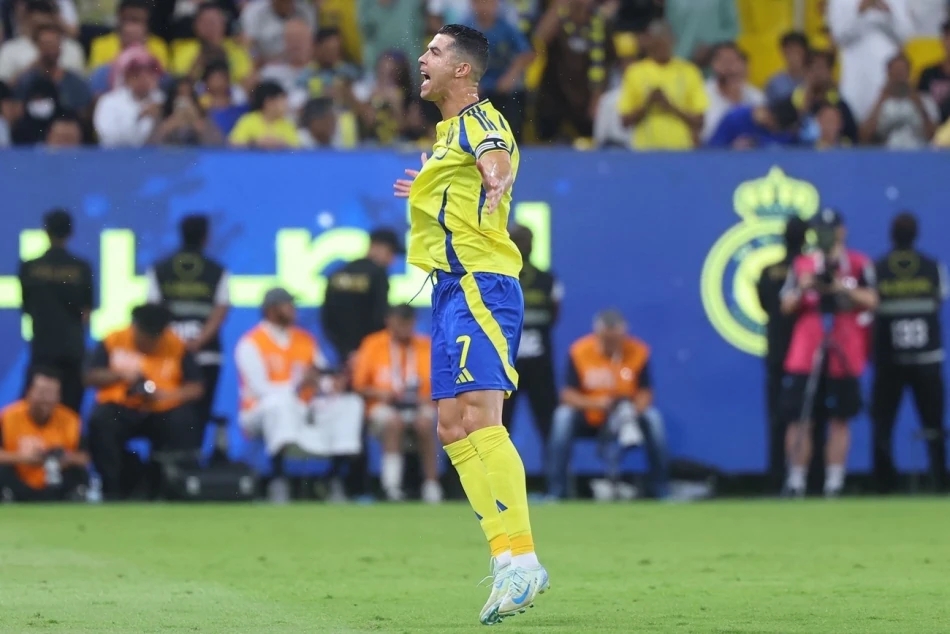
Cristiano Ronaldo's body appears to be aging in reverse. At nearly 40 years old, the Portuguese superstar's biological age measures just 28.7 years according to American laboratory data - making him physically 12 years younger than his actual age. This finding helps explain how he continues to dominate on the pitch for Saudi club Al-Nassr while most players his age have long retired.
The American labs analyzed nine key health markers including sleep quality, physical activity, heart rate zones, and body mass composition. The results show Ronaldo's body is "optimally configured for ideal sleep, recovery, and performance."
His HOMA-IR analysis, which measures how efficiently insulin produces energy, reveals "superior metabolic control that fuels muscles, maintains stable energy, and extends longevity." Even his hemoglobin levels demonstrate "exceptional endurance and aerobic capacity, even at peak performance during matches."
Ronaldo responded to the findings on social media with characteristic confidence, posting "The data doesn't lie" on X (formerly Twitter).
These numbers back up what fans see on the field. This season, Ronaldo has scored 11 goals and provided two assists in 12 matches across all competitions for Al-Nassr. He also recently led Portugal to qualify for the 2026 World Cup in the United States, Mexico, and Canada.
For the sports industry, Ronaldo's physical condition represents a new benchmark for athlete longevity. His current market value sits at 12 million euros according to Transfermarkt, remarkable for a player approaching 40. This data suggests elite athletes might compete at high levels much longer than previously thought possible, potentially reshaping how clubs approach player contracts and career planning.
The findings also highlight the growing role of advanced biometric analysis in professional sports. As teams invest more in sports science and personalized health monitoring, Ronaldo's case shows what's achievable when cutting-edge technology meets disciplined training and lifestyle choices.