UAE Sends Vital Aid to Earthquake-Ravaged Afghanistan, Providing Relief to Victims
 Sara Khaled
The UAE has delivered over 250 tons of emergency aid to Afghanistan following recent earthquakes, marking the sixth round of humanitarian assistance as part of an ongoing relief effort. The aid includes thousands of food baskets, tents, blankets, and dates distributed across affected regions.
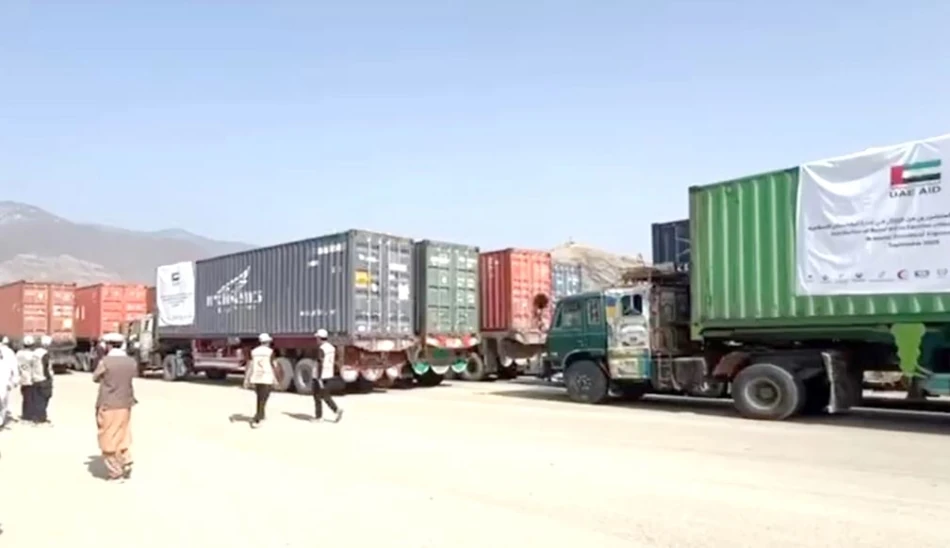
UAE relief teams transported the supplies using seven cargo planes and 21 trucks as part of what officials call a continuous humanitarian bridge to Afghanistan. The operation reflects the UAE's long-standing approach to disaster response, rooted in the humanitarian principles established by the country's founding father, Sheikh Zayed bin Sultan Al Nahyan.
The aid breakdown shows the scale of the operation: 6,696 food baskets weighing 167.4 tons, 1,030 tents at 51.5 tons, 850 blankets totaling 3.4 tons, and 28 tons of dates. In Samangan province alone, teams distributed 1,188 food baskets, 450 tents, and 850 blankets to earthquake victims.
Afghanistan sits on major fault lines and regularly experiences earthquakes. The country's limited infrastructure and ongoing economic challenges make international aid crucial during natural disasters. The UAE has positioned itself as a key humanitarian partner in the region, often providing rapid response to crises.
Local residents and earthquake victims have praised the UAE's quick response and continued support. The aid effort demonstrates how Gulf states are taking active roles in regional humanitarian crises, especially as traditional Western donors face budget constraints and competing priorities.
UAE officials say the assistance will continue until affected communities fully recover from the earthquake damage. This approach aligns with the country's broader foreign policy strategy of using humanitarian aid to build diplomatic relationships and regional influence.
The operation also highlights the logistics capabilities Gulf states have developed for international relief work. Moving hundreds of tons of supplies across borders requires significant coordination and infrastructure - something the UAE has invested in heavily over recent years.