UAE's Project 'Madar Al Saa'a' Generates 8% of Abu Dhabi's Total Electricity, Says Assistant Projects Manager
 Layla Al Mansoori
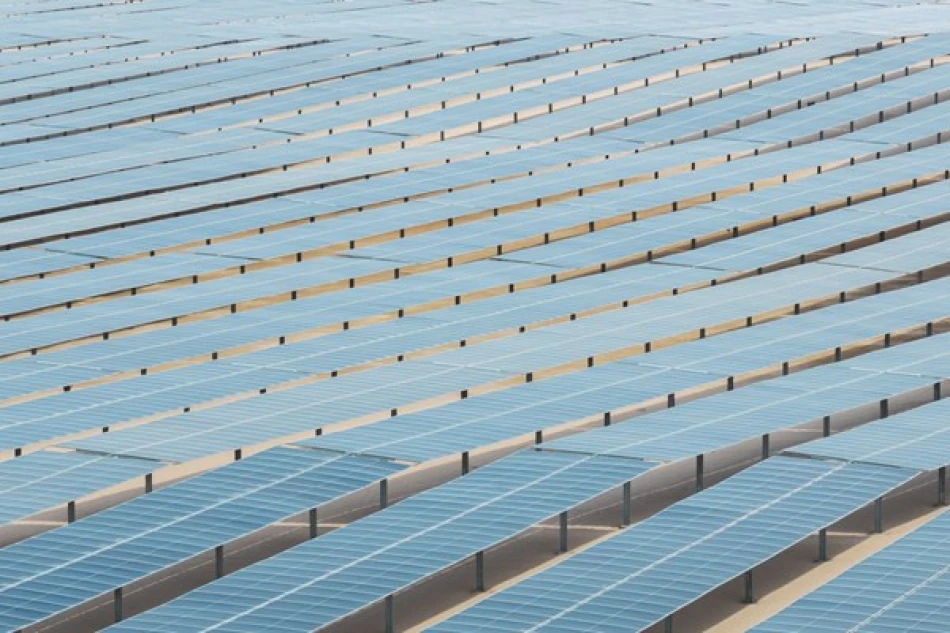
The UAE has launched construction of the world's largest solar-plus-storage project in Abu Dhabi. The "Around the Clock" project combines 5.2 gigawatts of solar power with 19 gigawatt-hours of battery storage, designed to deliver continuous clean electricity 24/7. This massive facility will cut carbon emissions by 5.7 million tons annually and provide enough power for over 500,000 homes.
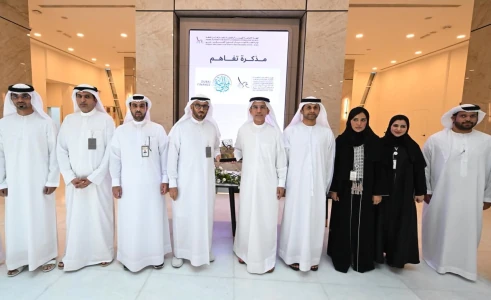
Adel Saeed Al Saadi, Assistant Director of Project Management at Emirates Water and Electricity Company, explained that the project addresses a critical challenge in renewable energy. Solar power alone can't guarantee grid stability during nighttime hours or bad weather. The facility stores excess solar energy generated during the day and releases it when demand peaks at night.
The project spans 61 square kilometers and represents a 22 billion dirham investment. It's expected to create 10,000 jobs during construction and operation phases. When completed, the facility will supply 1 gigawatt of continuous clean power to the grid, contributing about 8% of Abu Dhabi's total electricity generation.
This marks a significant step toward the UAE's goal of generating 60% clean energy by 2035. The Emirates Water and Electricity Company aims to reach 10 gigawatts of total solar capacity by 2030 while reducing carbon dioxide intensity from electricity generation by 42%.
The project uses advanced grid management technology, including flexible AC transmission systems, AI-powered forecasting, and sophisticated grid control systems. These tools help overcome the typical reliability issues that plague renewable energy sources by ensuring steady power output regardless of weather conditions.
Emirates Water and Electricity Company partnered with Abu Dhabi Future Energy Company "Masdar" for this project. The two companies previously collaborated on major solar installations including the "Noor Abu Dhabi" project in 2019 and the "Al Dhafra" project in 2023. Three more solar stations are planned: "Al Ajban," "Al Khazna," and "Al Zarraf."
For global energy markets, this project demonstrates that utility-scale renewable baseload power is becoming reality rather than aspiration. The combination of massive solar capacity with equally large storage systems could serve as a template for other countries looking to phase out fossil fuel dependence while maintaining grid reliability.
The facility also supports the UAE's broader strategy to achieve net-zero emissions by 2050. As the sole water and electricity buyer in Abu Dhabi emirate, Emirates Water and Electricity Company handles demand forecasting, contracting with producers, and operating transmission networks across the region.
The project's scale puts it at the forefront of global renewable energy infrastructure. While other countries have built large solar farms or battery storage systems separately, few have combined both technologies at this magnitude to create round-the-clock renewable power generation.