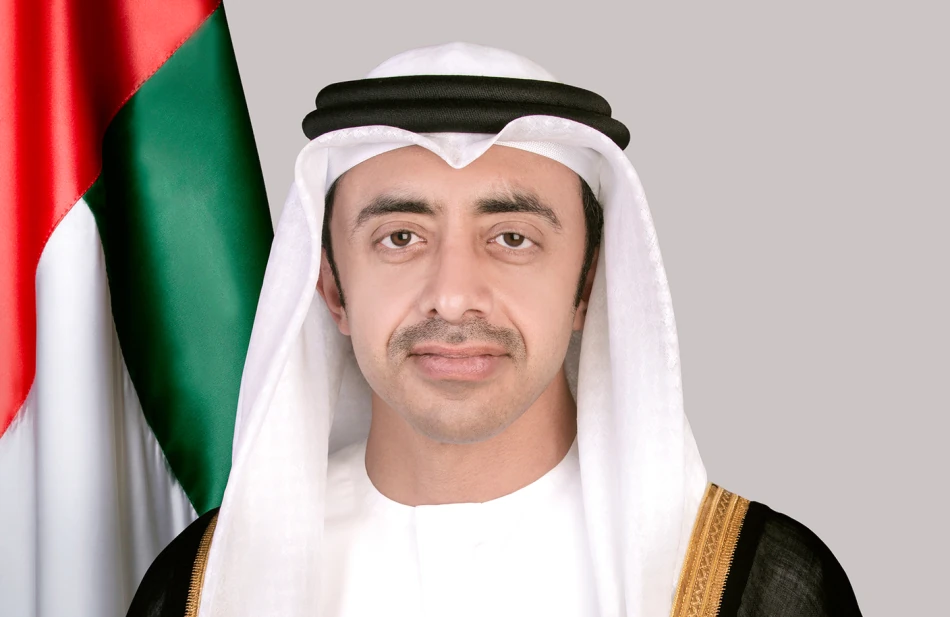
UAE's FM Sheikh Abdullah Discusses Bilateral Ties with Trinidad and Tobago Counterpart
 Sara Khaled
UAE Foreign Minister Sheikh Abdullah bin Zayed Al Nahyan met with Trinidad and Tobago's Foreign Minister Sean Sobers in Abu Dhabi to discuss strengthening bilateral ties and expanding cooperation across multiple sectors. The meeting signals both countries' commitment to deeper economic partnerships and coordinated approaches to regional challenges.
Sheikh Abdullah welcomed the Caribbean minister and praised the strong relationship between the UAE and Trinidad and Tobago. Both officials emphasized their countries' shared goal of working together to boost comprehensive development and sustainable economic growth.
The timing of this meeting reflects the UAE's broader strategy to strengthen ties with Caribbean nations, many of which serve as important energy partners and emerging markets. Trinidad and Tobago, as one of the Caribbean's largest energy producers, represents a natural fit for UAE investment and collaboration, particularly in oil, gas, and renewable energy sectors.
For investors and businesses, this diplomatic engagement could open new opportunities. The UAE has been actively seeking to diversify its international partnerships beyond traditional Middle Eastern and European allies. Trinidad and Tobago offers access to both Caribbean and Latin American markets, while the UAE provides a gateway to Middle Eastern and Asian economies.
The officials also discussed current regional and international developments, exchanging views on shared challenges. This suggests both countries see value in coordinating their positions on global issues, from energy policy to climate change initiatives.
UAE Minister of State Noura Al Kaabi and Omar Shahadeh, the Foreign Minister's envoy to the Caribbean and Pacific islands, attended the meeting. Shahadeh's presence highlights how seriously the UAE takes its Caribbean relationships – having a dedicated envoy shows this isn't just diplomatic courtesy but part of a sustained regional strategy.
The meeting comes as both regions face economic pressures from global inflation and energy market volatility. Stronger bilateral ties could help both countries weather these challenges through increased trade, investment flows, and knowledge sharing in key industries like energy, tourism, and financial services.