UAE Leads Global Initiative to Enhance Political Commitment to International Humanitarian Law and Prevention
 Sara Khaled
The UAE joined Australia, Austria, and Kenya in leading the second round of consultations for a working group focused on preventing violations of international humanitarian law. This effort is part of a global initiative organized by the International Red Cross Committee to strengthen political commitment to humanitarian law worldwide.
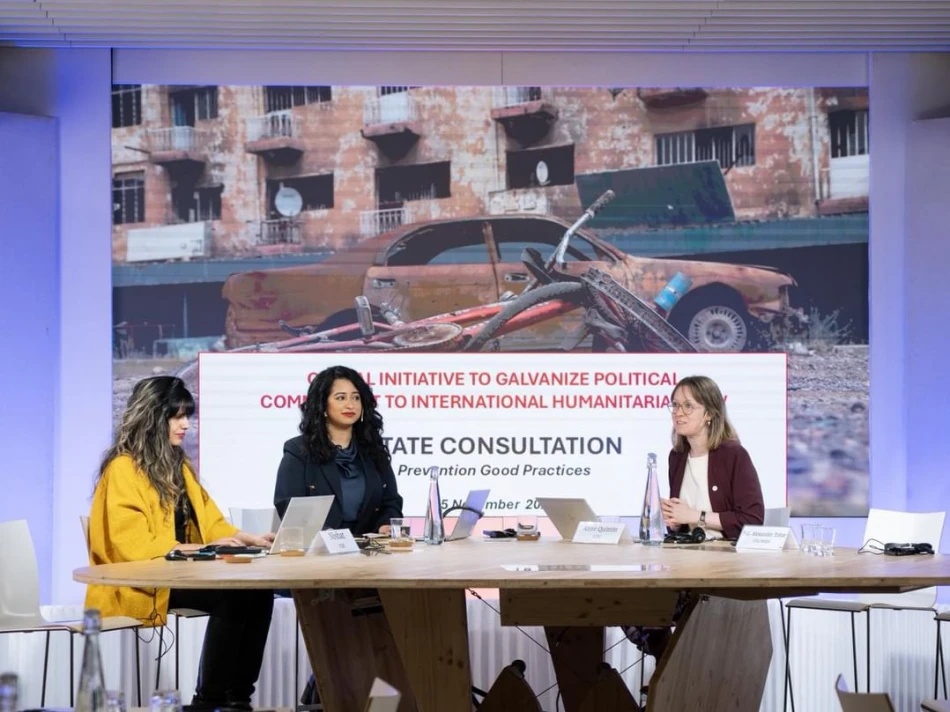
Representatives from all four countries managed discussion sessions with broad participation from member states, civil organizations, and experts. The talks focused on finding practical solutions and sharing experiences to identify best practices that could reduce violations.
Shahd Matar, Deputy Permanent Representative of the UAE to the United Nations in Geneva, chaired a session specifically about declining professionalism among conflict parties. This issue is considered a major factor that increases risks of humanitarian law violations. She emphasized that preventing these violations is essential for building stability, reducing conflict escalation, and establishing sustainable peace - goals that form the core of UAE foreign policy.
The wide participation from various stakeholders during the consultations reflected the importance of developing practical approaches, strategies, and effective methods to prevent violations and strengthen compliance with international humanitarian law.
The global initiative aims to strengthen political will and develop collective efforts to support respect for international humanitarian law worldwide. It provides an organized platform that allows countries and partners to develop practical and collaborative approaches to prevent and address violations. About 96 countries have officially joined the global humanitarian law initiative so far.
This initiative comes at a time when conflicts around the world continue to test international humanitarian standards. The collaborative approach between diverse nations like the UAE, Australia, Austria, and Kenya shows how countries from different regions can work together on shared humanitarian concerns, regardless of their varying political systems or economic structures.