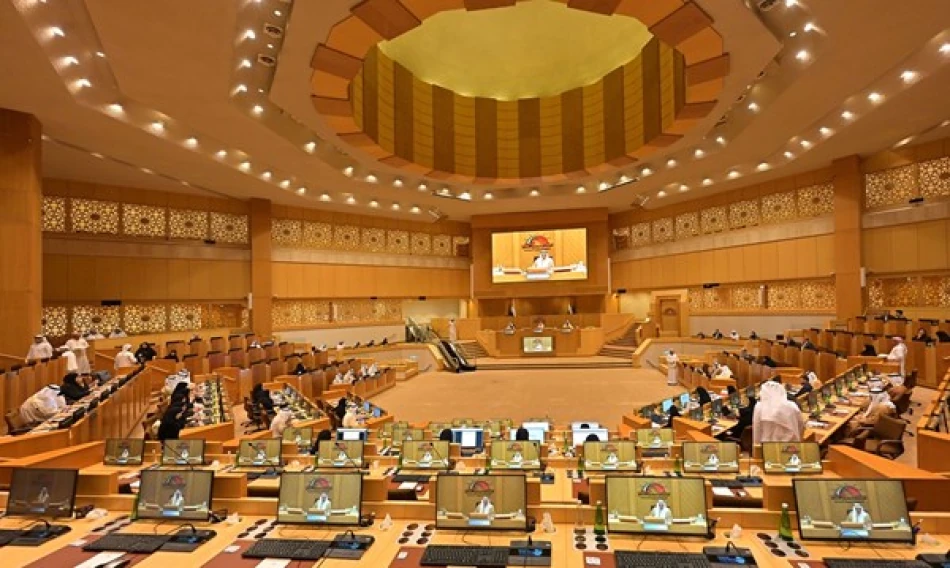
UAE Federal National Council Approves 2026 Federal Budget
 Layla Al Mansoori
The UAE Federal National Council has approved the country's largest-ever federal budget for 2026, totaling 92.4 billion dirhams ($25.2 billion). This represents a 29% jump from 2025's 71.5 billion dirham budget, signaling the Emirates' confidence in its economic trajectory and commitment to long-term growth.
Council Speaker Saqr Ghobash called the budget approval a "strategic message of confidence" that reflects the UAE's mature financial management. He emphasized that this isn't just a record number, but proof that the country continues on an upward path of growth and stability.
Minister of State for Financial Affairs Mohammed bin Hadi Al Hussaini explained that the budget represents advanced financial planning focused on future opportunities. The significant increase shows the national economy's strength and the government's dedication to sustainable development across the Emirates.
The budget prioritizes key sectors including education, healthcare, infrastructure, and social development. Al Hussaini noted that this focus reflects the UAE's belief that investing in people and innovation drives sustainable economic growth.
This budget comes as the UAE positions itself as a regional economic hub, diversifying away from oil dependence through investments in technology, renewable energy, and financial services. The substantial increase suggests the government expects continued economic expansion and wants to maintain momentum in critical development areas.
For investors and businesses, the budget signals strong government spending that could boost various sectors, particularly construction, technology, and services. The emphasis on infrastructure and innovation aligns with the UAE's Vision 2071 strategy to become the world's best country by its centennial.
The approval also demonstrates the UAE's financial confidence amid global economic uncertainty. While many countries are tightening budgets, the Emirates is expanding spending, indicating strong revenue projections and economic stability.