UAE Calls for Accountability in Sudan's Crimes: Seeking Justice for Victims
 Layla Al Mansoori
The UAE and Democratic Republic of Congo issued a joint statement holding Sudan's warring factions directly responsible for ending the civil war, while warning that extremist groups linked to the Muslim Brotherhood cannot dictate the country's future. The statement came during high-level talks in Kinshasa as international pressure mounts to resolve Sudan's devastating conflict.
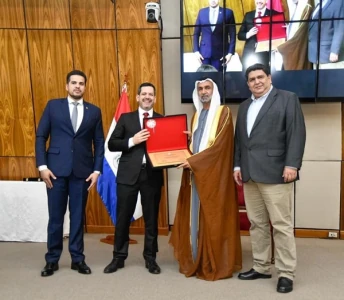
Sheikh Shakhbout bin Nahyan Al Nahyan, UAE Minister of State, met with Congolese President Felix Antoine Tshisekedi on November 16 to discuss regional security challenges and bilateral relations. The timing is significant as Sudan's war has displaced millions and created a humanitarian crisis that threatens regional stability.
Both countries condemned attacks on civilians by the Sudanese Armed Forces (based in Port Sudan) and the Rapid Support Forces across Sudan, including in al-Fashir. They demanded both sides protect civilians and humanitarian workers, while calling for accountability for war crimes committed during the 20-month conflict.
The statement specifically criticized the use of food and aid as weapons against civilians - a tactic that has pushed parts of Sudan toward famine. This weaponization of humanitarian assistance has become a key concern for international donors and aid organizations trying to reach affected populations.
The UAE welcomed Congo's assumption of the presidency of the International Conference on the Great Lakes Region, recognizing its role in promoting regional stability. This appointment gives Congo significant influence over peace efforts in a region plagued by multiple conflicts.
Both nations praised the recent Doha Framework Peace Agreement between Congo's government and the M23 rebel alliance, viewing it as a model for conflict resolution. The deal represents progress in eastern Congo, where fighting has displaced hundreds of thousands.
The countries endorsed efforts by the Quartet group - comprising the UAE, United States, Saudi Arabia, and Egypt - to broker a humanitarian ceasefire in Sudan. The Quartet has been working to establish corridors for aid delivery and push for a transition to civilian-led government independent of the warring parties.
On regional disputes, both countries called on Iran to end its occupation of three UAE islands: Greater Tunb, Lesser Tunb, and Abu Musa. They expressed frustration over the lack of progress in resolving this decades-old territorial dispute and renewed support for either bilateral negotiations or referral to the International Court of Justice.
The statement also highlighted the upcoming UN Water Conference in December 2026, which the UAE will co-host with Senegal. This reflects the UAE's growing focus on water security issues, particularly relevant for drought-affected regions like Sudan and parts of Central Africa.
For investors and regional watchers, the UAE-Congo alignment signals broader efforts to contain conflicts that disrupt trade routes and economic development across Africa. The emphasis on civilian governance in Sudan also reflects concerns that prolonged military rule could further destabilize the Horn of Africa region.