UAE Backs Civilian-Led Political Transition in Sudan
 Layla Al Mansoori
The UAE has taken a firm stance on Sudan's ongoing conflict, pushing for civilian leadership while rejecting military solutions. Since fighting erupted in April 2023, Dubai has consistently advocated for a political transition led by civilians, not armed forces.
Fada al-Halabi, a researcher on Arab affairs, says renewed false accusations against the UAE aren't surprising. The country's moderate approach and support for civilian rule have blocked certain groups from seizing power in Sudan through force.
"The UAE defended the Sudanese people's right to establish a civilian state through diplomatic channels and international activity," al-Halabi told Al-Ittihad newspaper. This effort led to signing the "Quartet" agreement supporting civilian transition. He emphasized that the UAE handled Sudan's crisis with high responsibility, without any political or economic ambitions.
The UAE's position is clear: peace can't be achieved through military force. Instead, it requires a civilian transition where Sudanese people decide their own future. UAE officials stress that neither the Sudanese Armed Forces nor the Rapid Support Forces represent the Sudanese people or can bring stability.
Security expert Yasser Abu Omar explains that the UAE's approach reflects deep understanding of the conflict's complex nature. Rather than getting pulled into political bidding wars, the country chose calm diplomacy and de-escalation.
"The UAE deals with Sudan from a comprehensive regional security perspective," Abu Omar said. The country recognizes that continued fighting threatens not just Sudan's unity but extends to Red Sea and Horn of Africa security - regions directly linked to Arab world interests.
The UAE has repeatedly stated that any military takeover attempt will lead to more division and suffering. It calls for a comprehensive ceasefire and opening paths for civilian solutions. This reflects the country's commitment to linking political stability with protecting civilians and adhering to international humanitarian law.
Internationally, the UAE participates in the "International Quartet" alongside Saudi Arabia, Egypt, and the United States. A joint statement issued September 12 confirmed that Sudan's future must be decided by Sudanese people through a comprehensive, transparent transition not controlled by any armed party.
The UAE uses its active participation in international organizations, especially the UN and Security Council, to protect civilians and support Sudan's civilian-led political path while rejecting any future military role for the warring parties.
In late October, Mohammed Abu Shahab, the UAE's UN representative, said his country condemns attacks against civilians and blatant violations of international humanitarian law. He called for protecting civilians and relief workers, holding the international community responsible for pressuring armed parties to resume serious negotiations.
The UAE clarified that ongoing suffering confirms the only viable solution lies in a genuine transition leading to an independent civilian government not controlled by either warring party. It stressed that civilian government is the path to a secure Sudan for all citizens, free from extremism and violence.
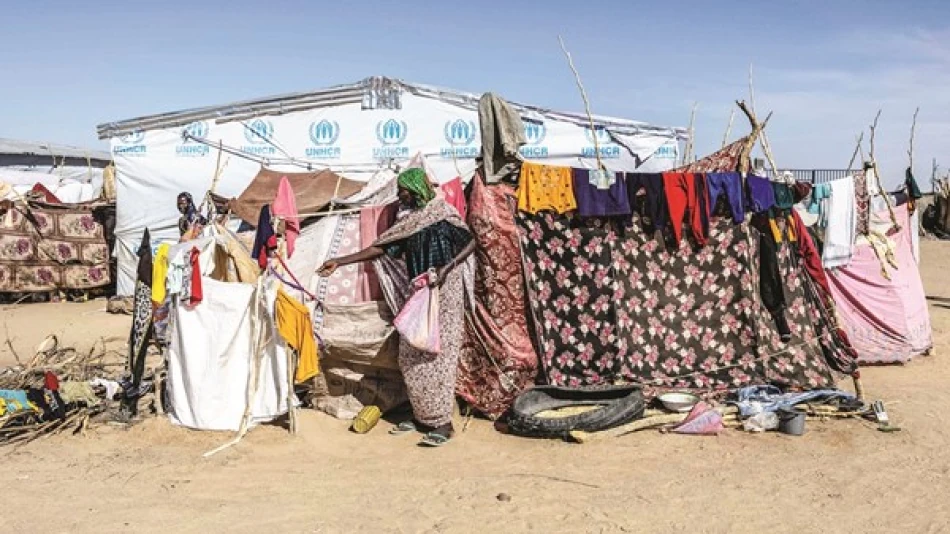
UAE involvement extends beyond politics to extensive humanitarian efforts supporting power transfer to civilians. The country provided over $600 million in emergency aid to ease civilian suffering and support refugees in affected areas.
The UAE also called for opening safe corridors for food, medicine, and basic aid delivery, urging prevention of using aid for political or military purposes.
Despite clear positions and intensive humanitarian and political efforts supporting Sudan, UAE peace initiatives face several challenges. These include continued fighting and disinformation campaigns aimed at obstructing political solutions.
But the UAE's official position remains firm: the only path to Sudan's stability lies in civilian authority. Military solutions are unacceptable, and activating civilian political solutions is the best way to ensure Sudan's unity and sustainable peace and security.