Trump-Led 'Peace Council' Outlines Key Aspects of U.S. Plan to End Gaza Conflict
 Sara Khaled
The United States is pushing for UN Security Council support for Trump's Gaza peace plan, with backing from the UAE, Egypt, Qatar, Saudi Arabia, and Turkey. The proposal centers on creating a "Peace Council" led by Trump to oversee Gaza's transition through 2027, alongside an international stabilization force and potential pathways to Palestinian statehood.
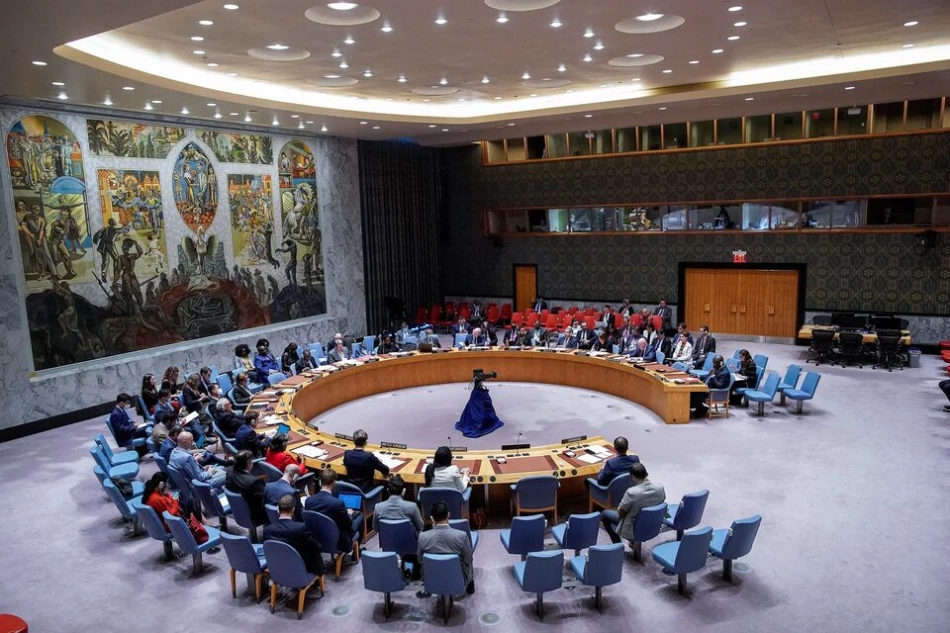
The Security Council will discuss the American draft resolution on Monday. The plan builds on detailed proposals the White House released in September, marking a significant shift in how the international community might handle Gaza's post-war governance.
**The Peace Council Structure**
Trump's plan creates a temporary governing body for Gaza run by a Palestinian technocratic committee. This group would handle daily public services and municipal affairs for Gaza residents, but under supervision from the new international "Peace Council."
The council would be headed by Trump himself, with other world leaders to be announced later. Former British Prime Minister Tony Blair is already confirmed as a participant. This body would set the framework for Gaza's reconstruction and funding until the Palestinian Authority completes its reform program and can safely regain control of the territory.
The approach sidesteps the complex question of who governs Gaza immediately after the war ends. Hamas currently controls the territory, while the Palestinian Authority governs parts of the West Bank but has limited influence in Gaza.
**International Security Force**
The draft resolution authorizes member states to form a temporary international stabilization force. This force would secure border areas and disarm Gaza, serving as the long-term internal security solution according to Trump's comprehensive plan.
This represents a major commitment from the international community. Previous peacekeeping efforts in the Middle East have faced significant challenges, and deploying forces in Gaza would require countries willing to put troops at risk in a volatile environment.
**Palestinian Statehood Pathway**
The resolution notably mentions the possibility of a future Palestinian state. Trump's plan links this to progress on Gaza's reconstruction and completion of Palestinian Authority reforms. The White House frames these as essential conditions for a credible path toward Palestinian self-determination.
This marks a shift from previous U.S. positions under Trump's first presidency, when his administration took steps that Palestinians viewed as undermining statehood prospects. The current plan acknowledges Palestinian statehood as a "legitimate aspiration," according to the White House.
The timing matters for regional stability. Arab nations backing this resolution have their own interests in Gaza's future. Egypt shares a border with Gaza and has historically played a key role in mediating conflicts there. The Gulf states see an opportunity to influence regional peace processes and potentially normalize relations with Israel.
For investors and regional economies, a stable Gaza could open new opportunities. The territory's reconstruction would require massive funding, potentially creating contracts for international firms. But success depends on whether this complex governance structure can actually work in practice.