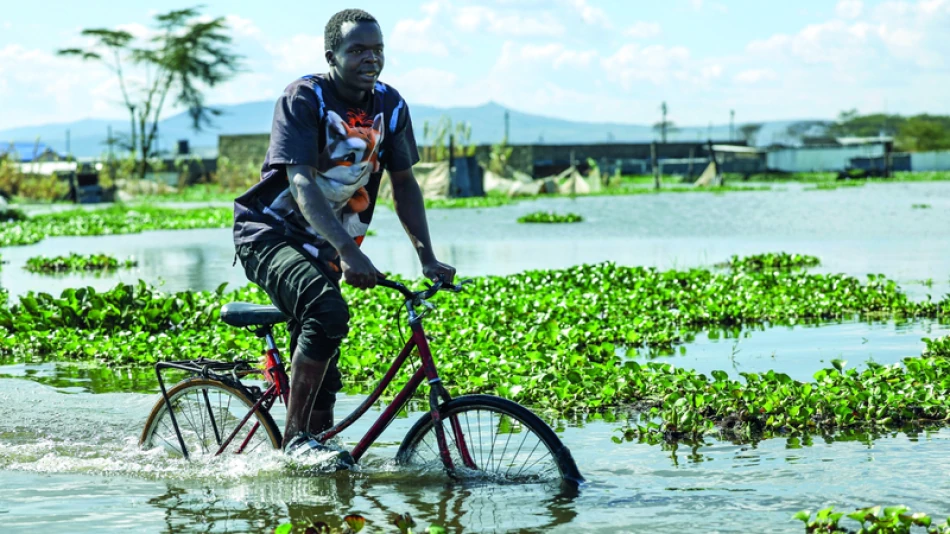
Thousands Displaced as Devastating Floods Submerge Kenya's Lake Naivasha
 Sara Khaled
More than 4,000 families have been forced from their homes as Lake Naivasha in Kenya's Nakuru County reaches record water levels, flooding entire communities. The crisis highlights a growing problem across East Africa's Rift Valley lakes, where rising waters since 2020 have displaced thousands and sparked debates about land ownership near water bodies.
Lake Naivasha's water levels have surged dramatically over the past three months, according to Joyce Sese, Naivasha's disaster management official. The flooding has swamped homes, schools, churches, and even a police station in Kihoto Estate. Heavy rains continue to pound Nakuru County, and officials expect the displacement numbers to climb higher.
This isn't an isolated incident. Several lakes across Kenya's Rift Valley have been steadily rising since 2020, creating a pattern of displacement that's becoming harder to ignore. The government has set up a multi-agency response team to help affected residents, many of whom have moved to nearby areas.
But here's where it gets complicated. Environmental experts are pointing to uncontrolled human settlement near river areas as a major factor making these displacements worse. When people build homes close to water bodies, they're essentially gambling that water levels will stay low. Climate patterns and increased rainfall are making that bet increasingly risky.
The flooding has reignited old arguments about who actually owns land around Lake Naivasha. Property rights in these areas have long been disputed, and when waters rise, these legal gray areas become real humanitarian crises.
For Kenya's government, this represents a growing challenge. The country needs to balance development pressures with environmental realities. People need places to live, but building too close to lakes and rivers creates predictable disasters when water levels rise.
The situation also reflects broader climate challenges facing East Africa. Changing rainfall patterns and more intense wet seasons are making traditional settlement patterns unsustainable. What worked for generations may no longer be safe as weather becomes less predictable.