The G7's Concerns over Restrictions on Aid to Gaza
 Layla Al Mansoori
G7 foreign ministers expressed serious concerns about restrictions blocking aid deliveries to Gaza, calling for immediate action to allow large-scale humanitarian assistance without interference. The statement comes as the group throws its weight behind President Donald Trump's plan to end the war in the territory.
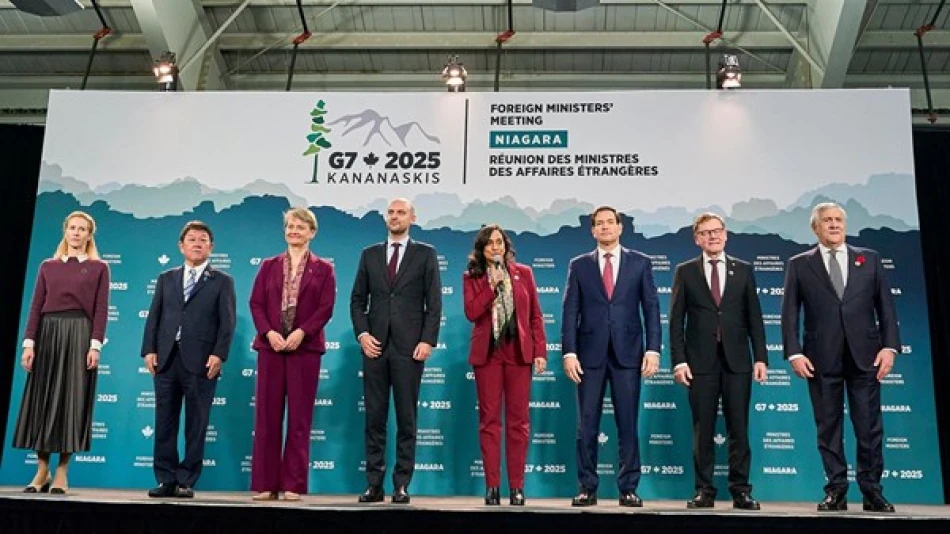
The ministers from the United States, Britain, France, Germany, Canada, Japan, and Italy wrapped up their two-day meeting in Canada with a joint statement demanding all parties remove barriers to aid flows. EU foreign policy chief Kaja Kallas also attended the discussions.
The timing matters. Gaza's humanitarian crisis has worsened dramatically since the conflict began, with international aid organizations repeatedly warning about blocked or delayed shipments. The G7's unified stance puts pressure on both Israeli authorities and Hamas to facilitate aid delivery.
But here's where it gets more significant - the ministers strongly endorsed Trump's peace plan for Gaza. They stressed that "all parties must continue to engage constructively in the next steps" outlined in the proposal.
For international observers, this represents a coordinated diplomatic push by major Western powers. The G7's backing gives Trump's plan more legitimacy on the global stage and signals these countries are ready to support implementation efforts.
The statement reflects growing international frustration with the humanitarian situation in Gaza. Aid groups have documented how security concerns, bureaucratic delays, and infrastructure damage have severely limited their ability to deliver food, medical supplies, and other essentials to civilians.
The ministers' call for "wide-scale" humanitarian assistance suggests they want to see a major increase in aid volumes, not just minor improvements to existing delivery mechanisms.