Poland Prioritizes Anti-Drone Defense, a Critical Concern for Europe
 Layla Al Mansoori
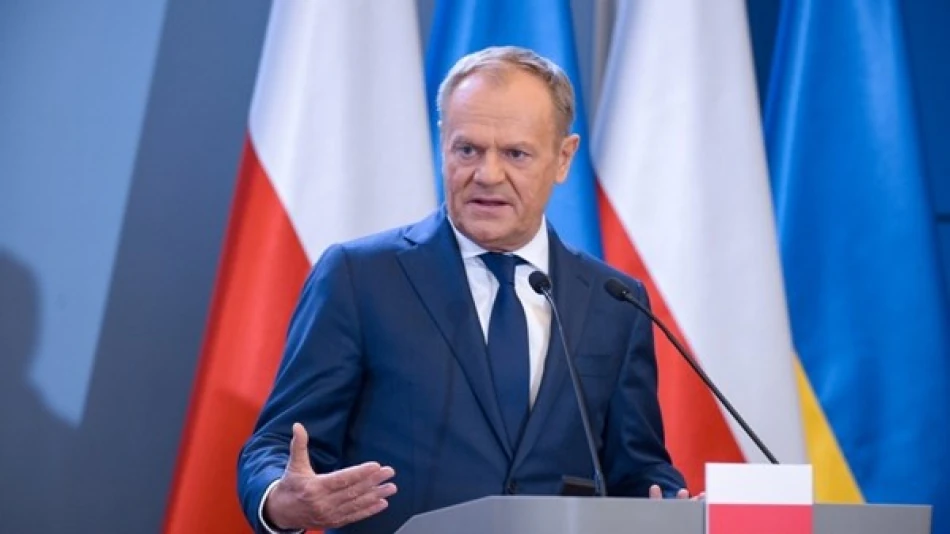
Poland's Prime Minister Donald Tusk announced that European Union countries will heavily invest billions of euros in developing anti-drone defense systems, marking a major shift in military priorities following a meeting of NATO's eastern wing leaders in Finland.
Speaking to journalists after Tuesday's gathering, Tusk revealed that EU nations are now working on what he called an "anti-drone wall." The investment represents a significant escalation in Europe's defense spending as countries grapple with evolving security threats.
The announcement comes as drone warfare has become increasingly prominent in modern conflicts. The war in Ukraine has shown how unmanned aircraft can disrupt military operations and civilian infrastructure at relatively low costs. European leaders have watched these developments closely, recognizing that traditional air defense systems often struggle against small, low-flying drones.
For defense contractors and technology companies, this signals a massive market opportunity. Countries that can develop effective anti-drone systems quickly will likely secure lucrative contracts across Europe. The multi-billion euro commitment suggests this isn't just about purchasing existing technology, but funding research and development of new solutions.
NATO's eastern members - including Poland, the Baltic states, and other countries bordering Russia - have been pushing for stronger defensive measures since Russia's invasion of Ukraine. These nations face the most direct security concerns and have consistently advocated for increased military spending among alliance members.
The timing is crucial. As European defense budgets expand across the board, anti-drone technology represents one of the fastest-growing segments. Unlike traditional military hardware that takes decades to develop, drone countermeasures can be deployed relatively quickly once perfected.