NATO Allies Vow to Counter Hybrid Threats: Enhanced Security and Deterrence Measures
 Layla Al Mansoori
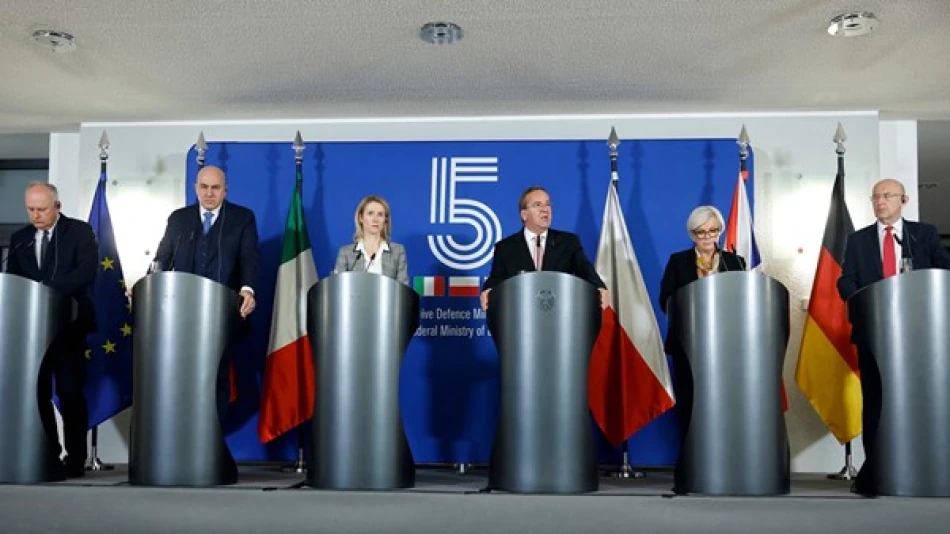
Five major NATO countries pledged Friday to strengthen cooperation against drone violations and cyberattacks after mysterious unmanned aircraft appeared over sensitive military sites and airports across Europe in recent months. The defense ministers from Germany, France, Italy, Poland, and the UK met in Berlin to address what they called "hybrid threats" targeting European infrastructure.
Several European airports have been disrupted by unexplained drone activity, particularly in Belgium, Denmark, Germany, Norway, and Poland. These incidents have raised serious concerns about security vulnerabilities at critical facilities. German Defense Minister Boris Pistorius said such actions aim to "destabilize and intimidate our societies."
The five nations committed to exploring defensive measures including anti-drone systems and better intelligence sharing among European allies. They're treating these incidents as part of a broader pattern of hybrid warfare that also includes cyberattacks and disinformation campaigns.
The ministers reaffirmed their "unwavering support" for Ukraine, with EU foreign policy chief Kaja Kallas joining the discussions. They promised continued military aid and pledged to integrate Ukraine's defense industry into European supply chains and initiatives. This represents a significant shift toward treating Ukrainian defense capabilities as part of Europe's long-term security infrastructure.
British Defense Secretary John Healey emphasized that the US is pushing European nations to increase defense spending, and "rightly so." He warned that Europe has entered "a new age of threat" requiring "a new age of defense." This reflects growing pressure on European NATO members to boost military budgets as security challenges mount.
The timing matters for defense contractors and military technology companies. European governments are signaling they'll spend more on anti-drone systems, cybersecurity, and intelligence-sharing infrastructure. For investors, this suggests sustained growth in the European defense sector as countries modernize their capabilities to handle unconventional threats.
The focus on hybrid threats shows how modern warfare has evolved beyond traditional military confrontations. Drones, cyber operations, and disinformation campaigns can disrupt critical infrastructure without crossing clear red lines that would trigger conventional military responses.