L3Harris and EDGE Partner to Develop Cutting-Edge Defense Technology Solutions
 Layla Al Mansoori
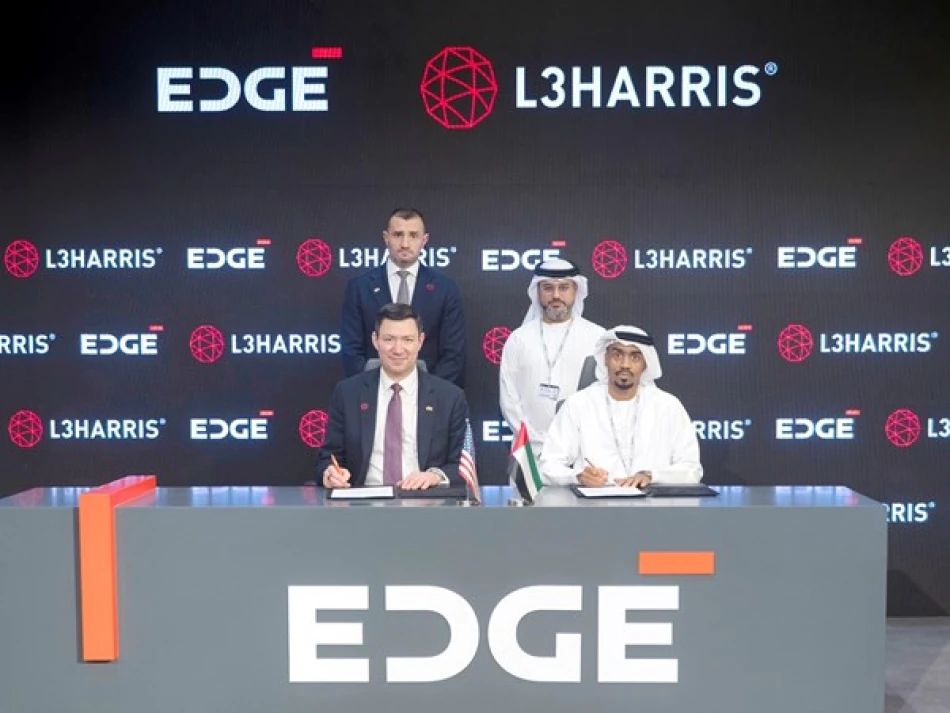
L3Harris Technologies and UAE defense giant EDGE Group signed a memorandum of understanding to strengthen their partnership in the Emirates. The deal creates a framework for joint research and development in artificial intelligence and autonomous systems, positioning both companies to tap into growing defense opportunities across the Middle East region.
The agreement marks a significant step for L3Harris as it expands its presence in the Middle East. The American technology company has been serving UAE clients for over 35 years and currently operates an office in Abu Dhabi. But this partnership with EDGE gives it a local heavyweight ally in one of the world's most active defense markets.
For the UAE, the deal fits into its broader strategy of building domestic defense capabilities while attracting international technology partners. EDGE has emerged as a major player since its formation in 2019, consolidating dozens of Emirati defense companies under one roof. The group now ranks among the world's top 25 defense contractors by revenue.
The focus on AI and autonomous systems reflects where military technology is heading. Both companies see these areas as critical for addressing what they call "emerging threats" - though they didn't specify exactly what those might be. The UAE has been investing heavily in advanced military technology, from drone systems to cyber warfare capabilities.
"Partnerships represent a fundamental feature of our strategy focused on reliable qualitative development," said Christopher Kubasik, L3Harris chairman and CEO. He described EDGE as an innovation leader the company wants to work with closely.
Hamad Al Marar, EDGE's managing director and CEO, called the partnership a solid foundation for cooperation in sensitive areas that contribute to product development, especially in fast-growing sectors.
The timing makes sense from a market perspective. Middle East defense spending has been rising steadily, driven by regional tensions and technological modernization programs. The UAE alone has committed billions to military upgrades over the next decade.
For investors watching the defense sector, this type of partnership signals how major contractors are adapting to compete globally. Rather than going it alone, companies are forming strategic alliances that combine local market knowledge with advanced technology capabilities.
The memorandum sets up the framework, but the real test will be what concrete projects emerge from this collaboration and whether they can deliver the advanced solutions both companies are promising their clients worldwide.