Gaza Internally Displaced Struggle Amidst Worsening Weather Conditions
 Layla Al Mansoori
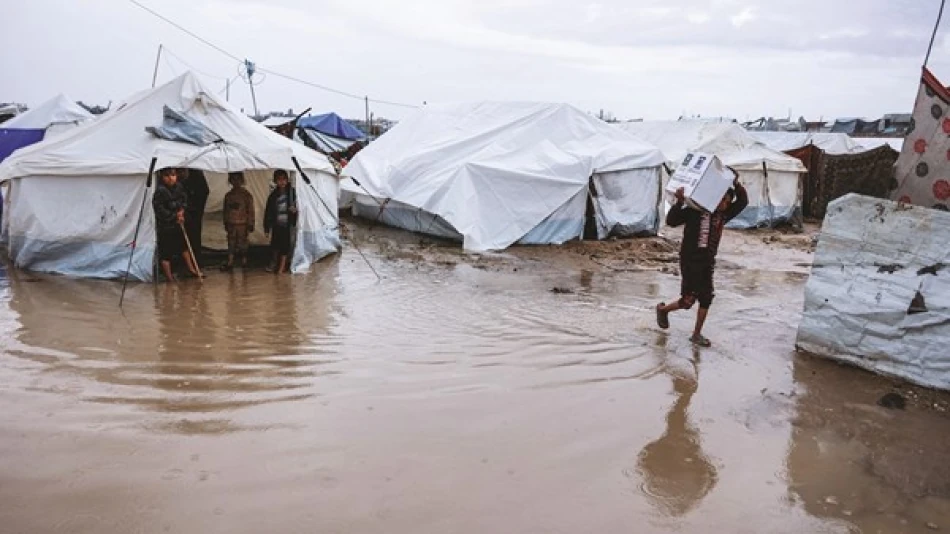
A severe winter storm has made Gaza's humanitarian crisis even worse, with thousands of displaced Palestinians now facing flooded tents, collapsed buildings, and deadly cold. The UN's Palestinian refugee agency warned that the heavy rains and freezing temperatures are creating perfect conditions for disease outbreaks, especially among children packed into overcrowded camps.
Three buildings collapsed in Gaza City yesterday after heavy rainfall, according to eyewitnesses. These structures had become makeshift shelters for displaced families who had nowhere else to go. Gaza's civil defense received over 2,500 emergency calls in just 24 hours from people whose tents were flooded by the storm.
The weather turned deadly when a baby girl named Rahaf Abu Jazar died in Khan Younis from cold exposure after her tent flooded with rainwater. Gaza's health ministry confirmed the death, which highlights how vulnerable displaced families have become during the winter months.
But here's the bigger problem - this suffering could be prevented. UNRWA says the crisis would be manageable if humanitarian aid could reach Gaza without restrictions. That includes medical supplies and proper shelter materials that would help families survive winter with basic dignity.
Palestinian analysts told Al-Ittihad that Israel is only allowing about 30% of the agreed humanitarian aid to enter Gaza, despite the ceasefire agreement. This creates a bottleneck that leaves hundreds of thousands of people without adequate food, medicine, or shelter materials.
The numbers tell the story. About 85% of Gaza's homes are completely destroyed, while another 15% are partially damaged and unsafe to live in. Civil defense officials warn that damaged buildings could collapse at any time, especially with heavy rains that erode soil and create new cracks in already weakened walls and columns.
Dr. Ayman Al-Raqab, a political science professor at Al-Quds University, explained that even though the war has stopped, Gaza's humanitarian situation hasn't improved. Food enters the territory in tiny amounts and sells at prices most people can't afford. This creates an unprecedented living crisis for ordinary families.
Political analyst Zaid Al-Ayoubi called the situation "catastrophic and unprecedented in the region's history." He said there's a real famine happening because Israeli restrictions prevent adequate food supplies from entering. Medical supplies and other basic needs are also severely limited.
The storm is expected to continue through Friday evening, which means more flooded tents and potential building collapses. For Gaza's displaced population, already struggling with destroyed infrastructure and limited aid access, the winter weather has become another life-threatening challenge in an already desperate situation.