Emirati Elders' Inspiring Journeys: Testimonies Unveil Pivotal Moments in UAE's Union History
 Sara Khaled
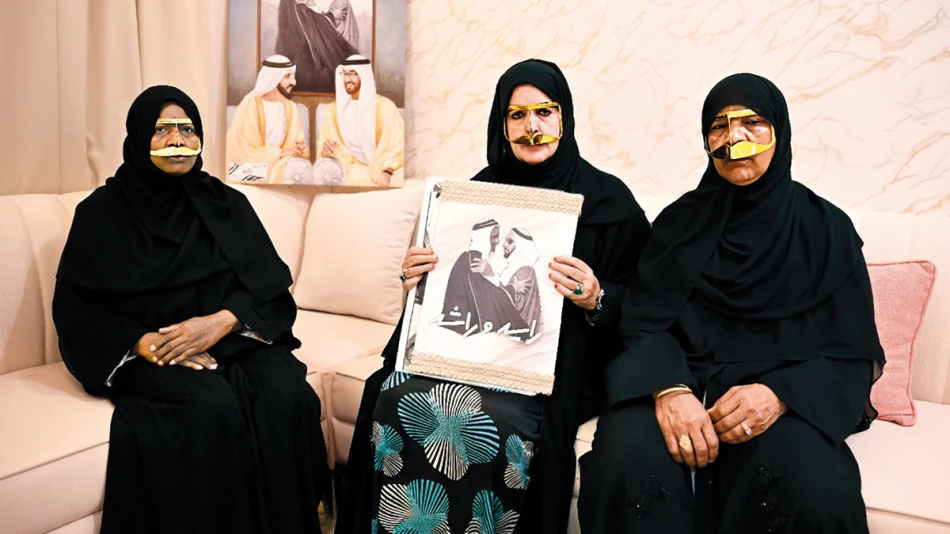
Senior Emirati citizens are sharing personal stories that capture the massive transformation their country went through after the UAE's formation in 1971. Their accounts paint a picture of life before and after unification - from relying on wells and mountain paths to building a modern state with advanced infrastructure, schools, hospitals, and contemporary services.
Ali Suleiman Al Ketbi, a retired military officer, remembers life in Al Shuwaib before the union as "simple and spontaneous." People depended on farming, herding, and traditional crafts. Houses were built from mud and palm fronds. Water came from springs and wells. Getting around meant walking or riding camels.
But 1971 changed everything. Al Ketbi calls it the start of "a renaissance that never stopped." Electricity, running water, and paved roads reached his area. Schools and health centers expanded. Agricultural projects grew. Life became "more comfortable and organized while keeping the community's authenticity."
He recalls a defining moment with the late Sheikh Rashid bin Saeed Al Maktoum. "When work began on Jebel Ali Port, Sheikh Rashid told us: 'This place will be great.' We wondered how this land could change so dramatically. But he saw the future clearly. Today, Jebel Ali is one of the world's most important ports - proof that our founders' vision was right."
In Hatta, resident Moza Rabie describes how the mountain city lived through major changes since the 1970s. Homes went from being simple huts and tents to proper houses built in 1977 under Sheikh Rashid's direction. Schools opened and Hatta Sports Cultural Club was established in 1981.
Um Saeed, another Hatta resident, remembers 1976 when locals had to fetch water from wells. She tells the story of a blind man named Zaeel who distributed water to houses with remarkable accuracy. Despite his disability, his sharp memory and intelligence amazed residents as he delivered water without mistakes, becoming a prominent community figure.
The current services for senior citizens - housing, healthcare, and social assistance - reflect the union's benefits and leadership care, she says. She even named her grandson Rashid in honor of the late Sheikh Rashid bin Saeed Al Maktoum.
Hamama Harith moved from Ajman to Dubai and lived in Port Said area for 20 years. She remembers how Sheikh Rashid would check on people at different times, making residents feel close to their leadership and showing genuine concern for their daily affairs. News of the union's formation was "joy that spread from house to house," carrying hope for one homeland and a better future.
In Fujairah, former municipality director Ahmed Shaker recalls education beginning in the emirate in 1962. He was among the first batch of 52 students before continuing his studies through a "guided correspondence" program. The mountain road between Fujairah and Dubai used to take four days through various routes before modern road projects completely changed movement and transportation.
Emirati artist Abdulrahim Salem, one of the founders of the visual arts movement, explains that visual arts before the union weren't clearly defined except through individual attempts. But with efforts from the Youth and Sports Ministry and Information Ministry, the movement began taking organized shape. The UAE Fine Arts Society's establishment in 1981 became a turning point, supporting young artists and organizing exhibitions, workshops, and summer courses.
He notes that Emirati artists distinguished themselves by drawing from their local environment, mentioning names like Abdulqader Al Rais, Najat Makki, Mona Al Khaja, and Obaid Suroor. His advice to young artists is to use technology and artificial intelligence in their work without abandoning creative sense and manual skills, considering "real talent a rare commodity."
These personal accounts highlight how the UAE's unification wasn't just a political event - it fundamentally changed how people lived, worked, and saw their future. From basic survival in harsh desert conditions to building one of the region's most modern states, the transformation happened within a single generation.