Emirates Soars to 200 Million Passengers in 22 Years, a Remarkable Aviation Journey
 Layla Al Mansoori
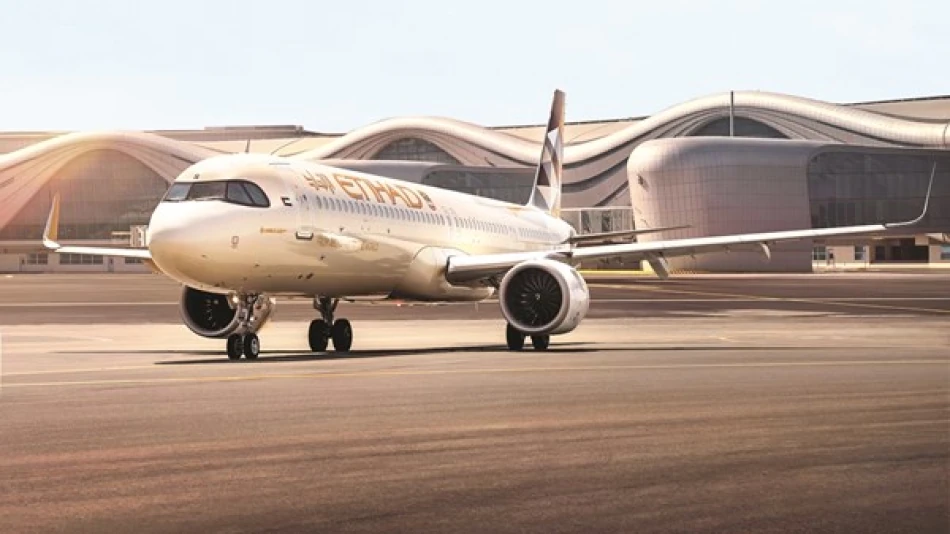
Etihad Airways celebrates 22 years since launching its first international flight from Abu Dhabi to Beirut on November 12, 2003. What started as a single route has grown into one of the region's major carriers, flying 213 million passengers and connecting Abu Dhabi to over 90 destinations worldwide with a fleet of 115 Boeing and Airbus aircraft.
The UAE's national carrier won the award for best new airline in its first year from the World Travel Awards. That early recognition hinted at what was coming. By 2005, just two years after launch, Etihad had carried its first million passengers in a single year.
The growth numbers tell a clear story. From launch through 2018, Etihad transported 139 million passengers. In 2019 alone, that number hit 17.5 million. By 2024, it reached over 18 million passengers, and the airline expects to carry more than 21 million this year.
Key milestones shaped the airline's expansion. In 2006, Etihad won best new airline for the third straight year and launched its frequent flyer program. The following year brought the first flight to Sydney and another World Travel Award for best Middle East airline. 2008 saw 34% passenger growth and the opening of Abu Dhabi airport's second runway.
That same year, Etihad announced what was then the world's largest aircraft order at the Farnborough Air Show. The airline also secured naming rights for Abu Dhabi's Formula 1 Grand Prix in 2009 and opened Terminal 3, dedicated to Etihad passengers.
The carrier reached another benchmark in 2010 when its loyalty program passed one million members. By 2013, Etihad became one of the few airlines serving all inhabited continents. Fleet expansion continued with the Airbus A380 joining in 2014 and the Boeing 787 in 2015.
Service improvements kept pace with growth. Etihad won the award for world's best first class in 2017 and launched economy seat selection options in 2018. The Airbus A350 joined the fleet in 2022, the same year the airline celebrated its 10 millionth guest and transferred ownership to Abu Dhabi Holding.
Infrastructure upgrades supported this expansion. In 2023, Etihad moved all operations to the new Terminal A at Zayed International Airport, giving the carrier a modern hub that matches its growth ambitions.
For investors and the broader aviation market, Etihad's trajectory reflects Abu Dhabi's push to become a major business and financial center. The airline's growth mirrors the emirate's economic diversification strategy, positioning the capital as a key transit point between East and West.
Looking ahead, 2025 marks what Etihad calls an exceptional year with plans to launch 18 new destinations. This expansion comes as Middle Eastern carriers compete for market share in the post-pandemic recovery, with each trying to capture more connecting traffic through their respective hubs.