Emirates and ENOC Explore Sustainable Aviation Fuel Opportunities in Dubai
 Layla Al Mansoori
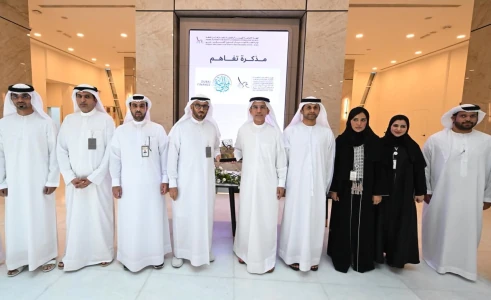
Emirates Airlines and ENOC Group signed a partnership deal to explore sustainable aviation fuel production and supply in Dubai, marking a significant step toward reducing the aviation industry's carbon footprint. The agreement, announced at Dubai Airshow 2025, aims to establish local production capabilities and supply chains for sustainable aviation fuel at Emirates' Dubai hub.
The partnership creates a framework for feasibility studies examining sustainable aviation fuel supply opportunities in Dubai. This includes evaluating supply chain infrastructure, production capabilities, and commercial viability. ENOC will assess its potential to contribute to local production, while a joint steering committee will oversee evaluation and implementation phases.
"Emirates continues exploring ways to integrate sustainable aviation fuel into our operations, and our partnership with ENOC represents an important step in this direction," said Adel Al Redha, Emirates' Executive Vice President and Chief Operating Officer. He emphasized that establishing a reliable sustainable fuel supply system at Dubai operations is a key priority for the airline.
The timing aligns with the UAE's ambitious target to supply 1% of national airlines' fuel from locally produced sustainable aviation fuel by 2031. This goal supports the country's broader commitment to achieve net-zero emissions by 2050.
Hussein Sultan Lootah, ENOC Group's Acting CEO, highlighted sustainable aviation fuel's central role in reducing aviation carbon emissions. The partnership represents shared commitment to developing local sustainable aviation fuel production and building the necessary infrastructure to make low-carbon aviation a reality.
Sustainable aviation fuel offers significant environmental benefits. When mixed with conventional jet fuel at up to 50%, it produces substantially lower carbon emissions throughout its lifecycle. In pure form, sustainable aviation fuel can reduce emissions by up to 80% compared to traditional jet fuel, according to approved lifecycle assessment methodologies like CORSIA.
Emirates has been actively involved in the UAE's sustainable aviation fuel ecosystem. The airline participates in technical working groups under the Ministry of Energy and Infrastructure's Aviation Fuel Executive Committee and sits on Dubai's biofuel, hydrogen, and sustainable aviation fuel committee established by the Dubai Supreme Committee of Energy.
The carrier has contributed to developing the UAE's sustainable aviation fuel policy, which aims to transform the country into a regional hub for alternative fuel production. The policy targets production of 700 million liters by 2030. Emirates also participated with the UAE General Civil Aviation Authority in developing the country's power-to-liquid roadmap, led by the Ministry of Energy and Infrastructure and the World Economic Forum.
Emirates has conducted several test flights using sustainable aviation fuel on both Boeing 777 and Airbus A380 aircraft. In January 2023, the airline operated a Boeing 777 flight using 100% sustainable fuel in one engine. Later that year, it conducted the first A380 test flight using 100% sustainable fuel in one of its four engines.
The partnership between Emirates and ENOC represents more than just corporate cooperation. It signals Dubai's serious commitment to becoming a sustainable aviation fuel production center in the Middle East. With Emirates being one of the world's largest international carriers and ENOC's established energy infrastructure, this collaboration could influence how other airlines and fuel companies approach sustainable aviation initiatives across the region.
The aviation industry faces mounting pressure to reduce emissions as global climate commitments tighten. Sustainable aviation fuel currently represents one of the most viable near-term solutions for commercial aviation, which accounts for about 2-3% of global carbon emissions. But supply remains limited and costs stay high compared to conventional jet fuel.
Local production in Dubai could help address both challenges by reducing transportation costs and creating economies of scale. The UAE's strategic location as a global aviation hub makes it well-positioned to serve not just Emirates but potentially other carriers operating through the region.