Deadly Floods Ravage Thailand and Indonesia, Claim Dozens of Lives
 Sara Khaled
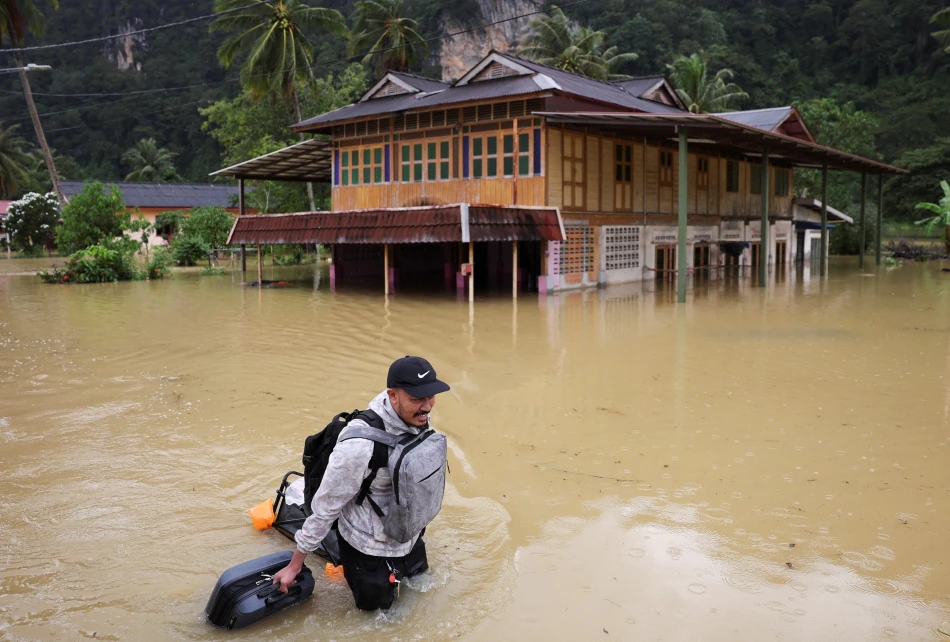
Catastrophic flooding across Southeast Asia has killed at least 41 people and displaced millions in Thailand, Malaysia, and Indonesia. The disaster highlights the region's growing vulnerability to extreme weather events as monsoon rains continue to batter communities along major trade routes and tourist destinations.
Thailand bore the worst impact with 33 confirmed deaths from massive floods in the country's south, according to government officials. More than 5.2 million people have been affected by the seasonal rains that turned deadly this week.
The hardest-hit area is Hat Yai province, which sits on Thailand's border with Malaysia. Climate expert Siri Supratid warned that floodwaters could take weeks to recede from the region. Emergency teams can only move through many areas by boat, while the government deployed helicopters to drop food and relief supplies to families trapped in their homes.
The flooding has stranded about 8,000 tourists, mostly from Malaysia, Singapore, and Indonesia, in hotels and at Hat Yai airport. Many are foreign visitors who got caught in the rapidly rising waters. Supply shortages are already hitting many affected areas.
Across the border in Malaysia, around 10,000 people have sought shelter in temporary evacuation centers in Kelantan state. The flooding has disrupted normal life and forced mass evacuations as rivers overflow their banks.
Indonesia's Sumatra island is also dealing with severe impacts. Days of heavy rainfall triggered both floods and landslides, displacing thousands of residents. At least eight people died and dozens were injured, according to Indonesia's disaster management agency.
The timing couldn't be worse for the region's economy. These areas serve as major transportation hubs and tourist destinations. Hat Yai, for example, is a key crossing point between Thailand and Malaysia. The disruption affects both local communities and the broader regional economy that depends on smooth movement of people and goods.
Southeast Asia faces these extreme weather events more frequently as climate patterns shift. The region's dense population and extensive river systems make it particularly vulnerable when monsoons intensify beyond normal levels.