Catastrophic Floods Ravage Indonesia, Claiming Over 1,000 Lives
 Layla Al Mansoori
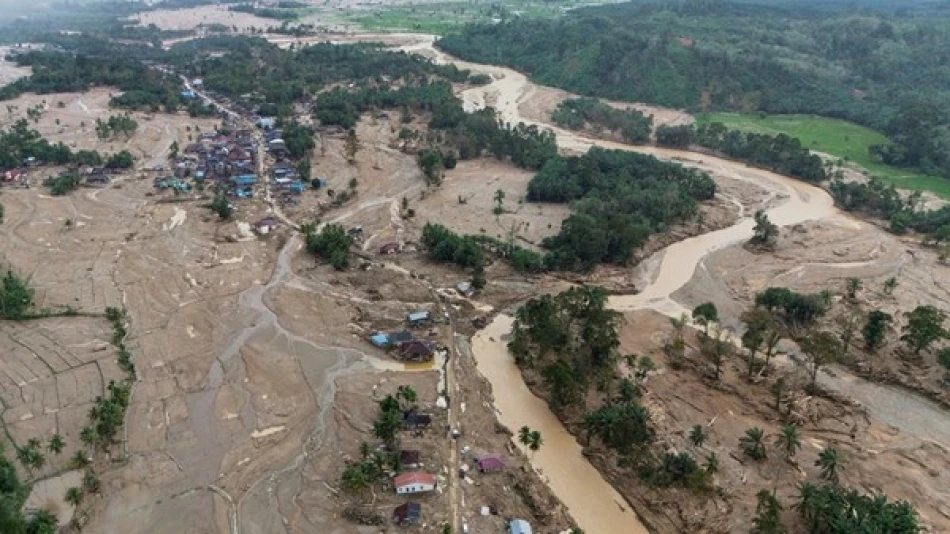
Indonesia's recent floods and landslides have killed 1,003 people, with 218 still missing, according to the country's disaster management agency. The natural disasters struck two weeks ago across North Sumatra, West Sumatra, and Aceh provinces, leaving over 5,400 injured and forcing 1.2 million people into temporary shelters.
The scale of this disaster highlights Indonesia's ongoing battle with extreme weather. The archipelago nation sits in one of the world's most disaster-prone regions, where heavy monsoon rains regularly trigger deadly floods and landslides. But this latest event ranks among the country's worst natural disasters in recent years.
The affected provinces on Sumatra island are home to millions of people, many living in areas vulnerable to flooding. North and West Sumatra are major agricultural regions that supply palm oil and other commodities to global markets. Aceh province, which was devastated by the 2004 tsunami, has been working to rebuild its infrastructure for nearly two decades.
The economic impact extends beyond the immediate human cost. With over a million people in temporary shelters, the government faces massive reconstruction expenses. The disaster also disrupts supply chains for key exports, potentially affecting global commodity prices.
Indonesia's disaster management has improved since the 2004 tsunami, but events like this show how climate change is making extreme weather more frequent and severe. The country's geography - thousands of islands with mountainous terrain and dense populations along coastlines - makes it especially vulnerable to these disasters.
Search and rescue operations continue for the 218 missing people, though hopes fade as time passes. The government is now focusing on providing aid to displaced families and planning long-term recovery efforts for the affected regions.