Bahrain's 'Al-Sakhir Declaration' Calls for Enhanced Institutional Cooperation for Security and Prosperity in the Gulf
 Sara Khaled
Gulf leaders just wrapped up their 46th summit in Bahrain with the "Sakhir Declaration" — a roadmap that shows how the six oil-rich nations plan to stay unified while dealing with everything from the Gaza war to artificial intelligence. The declaration comes as the Gulf Cooperation Council faces pressure to maintain regional stability and economic growth amid global uncertainty.
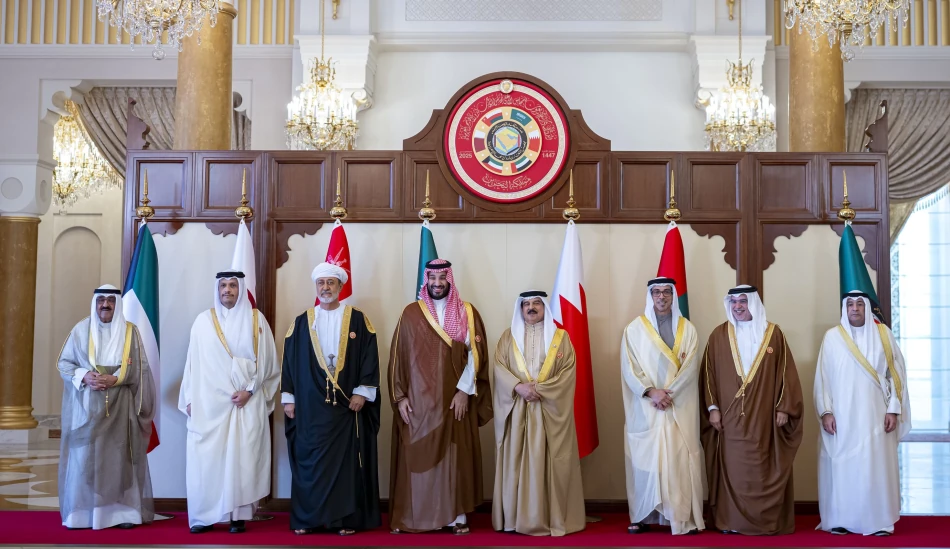
The summit brought together leaders from Saudi Arabia, UAE, Kuwait, Qatar, Bahrain, and Oman in Sakhir, Bahrain. Their message was clear: Gulf unity isn't just about shared history anymore. It's about building a modern bloc that can compete globally while keeping the region stable.
Here's what makes this declaration different from typical diplomatic statements. The leaders committed to specific economic targets, including completing their common market and customs union. They're also pushing hard on digital infrastructure — think shared payment systems and cloud services that would let Gulf citizens work and invest across borders like it's one country.
On technology, the Gulf states are betting big on AI and cybersecurity cooperation. This isn't just about keeping up with global trends. These countries are trying to reduce their dependence on oil by building knowledge economies. The declaration specifically mentions supporting youth and women in this digital transformation, which signals a real shift in traditionally conservative societies.
The Gaza conflict got significant attention. Gulf leaders backed the Sharm el-Sheikh peace summit outcomes and reaffirmed support for a Palestinian state based on 1967 borders with East Jerusalem as its capital. This matters because Gulf states have been quietly normalizing relations with Israel, but public pressure over Gaza has complicated those efforts.
Environmental commitments feature prominently too. The declaration promises to cut carbon emissions and boost clean energy projects. This isn't just about global climate goals — Gulf states know their oil-dependent economies need to diversify before the world moves away from fossil fuels.
The leaders also announced support for Bahrain's upcoming role representing Arab states on the UN Security Council. This gives the small island nation outsized diplomatic influence and shows how Gulf states are coordinating their international positions.
Italian Prime Minister Giorgia Meloni attended part of the summit, where leaders agreed to develop a comprehensive strategic partnership with Italy. This reflects the Gulf's strategy of building ties beyond traditional allies like the US and UK.
For investors and businesses, the declaration signals continued political stability in a region that controls about 40% of global oil reserves. The push for economic integration could create new opportunities, especially in technology and infrastructure sectors.
But here's the challenge: turning declarations into reality. The Gulf states have made similar promises before about economic integration and political coordination. The real test will be whether they can actually build the shared institutions and policies needed to compete with economic blocs like the EU or ASEAN.
The timing matters too. With conflicts raging in Gaza, Lebanon, and other regional hotspots, the Gulf states are positioning themselves as the stable, prosperous alternative in a chaotic Middle East. Whether that strategy works depends on their ability to deliver on these ambitious commitments.