Winter Chill Exacerbates Gaza's Humanitarian Crisis: Weathering the Storm
 Layla Al Mansoori
Gaza's humanitarian crisis is reaching catastrophic levels as winter sets in, with Palestinian officials and aid workers warning that hundreds of thousands of families face life-threatening conditions. The combination of destroyed infrastructure, severe shortages of food and fuel, and Israel's continued restrictions on aid deliveries has created what experts call a perfect storm of human suffering.
Adnan Abu Hasna, media advisor for UNRWA, says the situation gets worse by the day as temperatures drop and rains pour down. Israeli authorities continue blocking aid trucks carrying hundreds of essential items, including tents and blankets that people desperately need to survive the harsh cold.
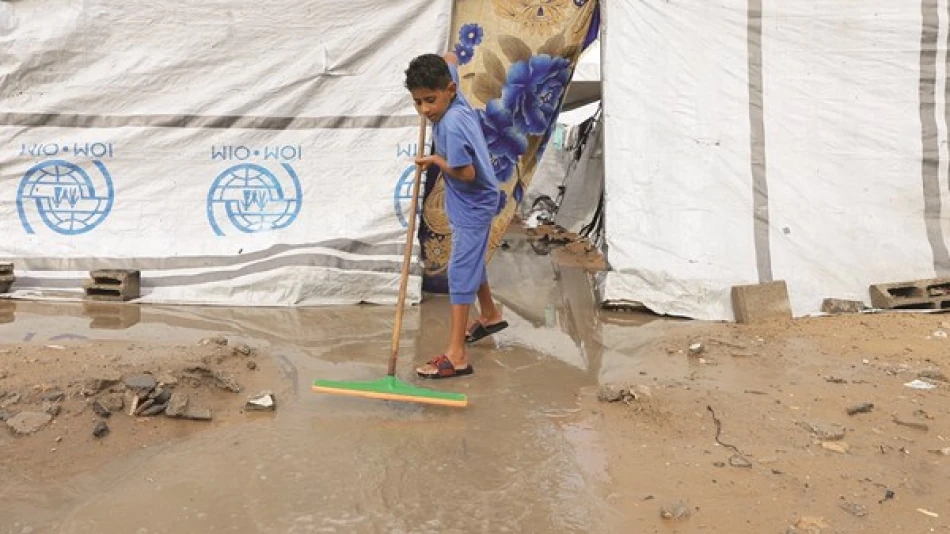
The recent heavy rains exposed just how bad things have gotten. Thousands of worn-out, damaged tents were flooded, especially those scattered along the coastline where many families have been forced to shelter. Abu Hasna says the severe weather has caused immense suffering for hundreds of thousands of Palestinians living in the open, leading to a sharp rise in illness and disease outbreaks.
The scale of destruction is staggering. Dr. Ayman Al-Raqab, a political science professor at Al-Quds University, says 85% of Gaza's homes have been completely destroyed. The remaining buildings are partially damaged and unsafe to live in, ready to collapse at any moment. This makes living conditions catastrophic by any measure.
Al-Raqab points out that Israel has blocked tents and mobile shelters donated by various countries for an entire year. This has created a severe shortage of basic shelter while the food crisis continues to worsen.
The timing couldn't be worse for Gaza's population. Winter weather typically brings challenges even in normal circumstances, but the current situation leaves families with no protection from the elements. Many are sleeping in makeshift shelters or damaged tents that offer little defense against rain and cold temperatures.
Palestinian analyst Zaid Al-Ayoubi says the humanitarian situation remains catastrophic, placing full responsibility on Israel for the crisis that has intensified with winter's arrival. He's calling for urgent international intervention to stop what he describes as crimes against civilians, particularly as rains flood the tents of hundreds of thousands of displaced people without any meaningful international humanitarian response.
The crisis highlights the broader challenges facing international aid efforts in conflict zones. When basic supplies like tents and blankets are blocked from entering, even well-intentioned relief efforts cannot reach those who need them most. This creates a situation where natural weather patterns become potential death sentences for vulnerable populations.