United Tribal Bonds: Emirati Tribes Stand Strong as One Nation
 Layla Al Mansoori
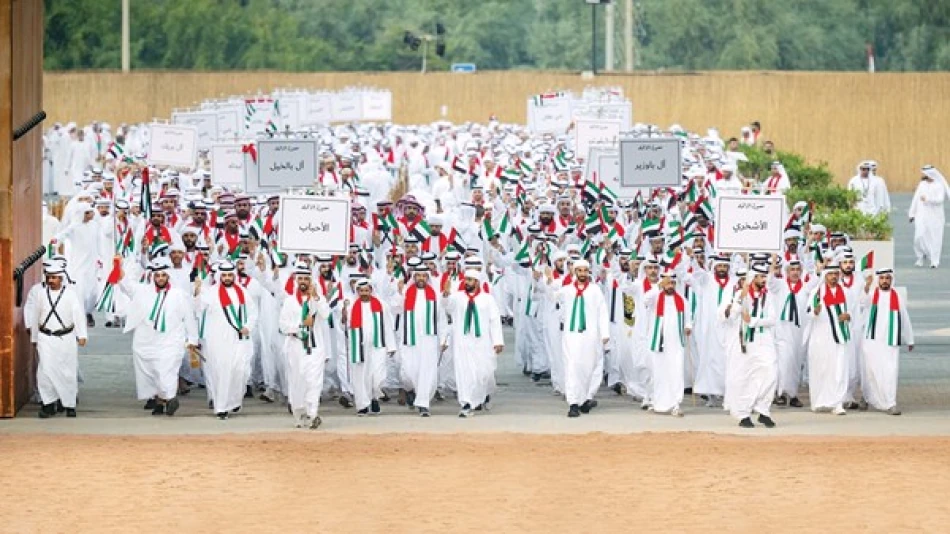
Thousands of Emiratis from various tribal communities gathered in Abu Dhabi yesterday for the Union March, celebrating the UAE's 54th National Day with displays of unity and loyalty to their leadership. Participants wore the colors of the UAE flag and chanted "The house remains united, and our tribe is the Emirates," emphasizing their collective identity as one nation.
The march brought together representatives from dozens of tribal groups across the Emirates, creating a powerful symbol of national cohesion. Participants recited poetry celebrating brotherhood and unity while reaffirming their allegiance to President Sheikh Mohamed bin Zayed Al Nahyan and the country's leadership.
Ahmed Abdullah Al Dahbal Al Ameri from the Al Awamir tribe said the event represents their "comprehensive tribe - the Emirates." He emphasized that despite coming from different tribal backgrounds, all participants see themselves as part of one larger Emirati family.
Dr. Khaled Khamis Al Abri, coordinator for the Al Abri tribe, expressed gratitude to the leadership and asked for continued security and prosperity for the nation. The sentiment was echoed across tribal representatives who spoke of living in a "land of goodness and peace."
The march holds particular significance as it connects the UAE's tribal heritage with its modern national identity. Many participants referenced the founding fathers, especially the late Sheikh Zayed bin Sultan Al Nahyan, who united the seven emirates under one flag in 1971.
Said bin Rashid Al Neyadi from the Al Neyadi tribe called the march "a good opportunity to meet with our brothers from UAE tribes under the banner of the united house." This reflects how the event serves as both celebration and renewal of social bonds that transcend traditional tribal boundaries.
Several coordinators emphasized how the march demonstrates the evolution from separate tribal identities to a unified Emirati identity. Ali Hadi Al Hamami noted that the celebration honors both the founding vision and current leadership that has positioned the UAE among developed nations.
The event showcases how the UAE has successfully integrated its tribal social structure into a modern nation-state. Rather than abandoning traditional identities, the country has woven them into a broader national fabric where tribal pride reinforces rather than competes with national loyalty.
For the leadership, such displays of unity carry strategic importance. They demonstrate social cohesion at a time when regional tensions and economic changes challenge Gulf states. The voluntary participation of tribal leaders signals strong grassroots support for government policies.
The march also reflects the UAE's approach to nation-building, which emphasizes inclusion and respect for traditional structures while building modern institutions. This balance has helped the country maintain stability during decades of rapid development and social change.