United Nations Condemns Israel's Alleged Housing Massacre in Gaza
 Layla Al Mansoori
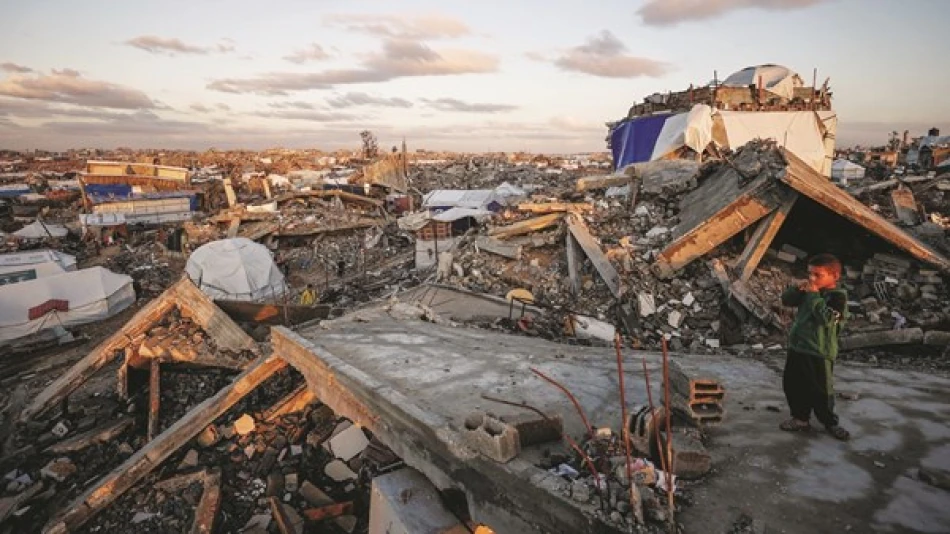
Gaza faces what UN experts are calling a "housing massacre" as Israeli forces continue demolishing homes even during the current ceasefire. Over 190,000 buildings have been damaged or destroyed, leaving more than a million Palestinians displaced and 288,000 families without proper shelter.
Balakrishnan Rajagopal, the UN Special Rapporteur on adequate housing, said the ongoing destruction in Gaza forms part of genocide crimes. He pointed out that despite the ceasefire agreement, Israeli forces keep killing civilians, demolishing houses, and blocking humanitarian aid from reaching those who need it.
"What's happening in Gaza during the truce is part of the genocide crime," Rajagopal said in press statements. "The occupation continues killing and demolishing homes and preventing adequate humanitarian assistance from arriving, and none of the truce provisions have been effectively implemented."
The numbers paint a grim picture. Palestinian Central Bureau of Statistics data shows more than 100,000 buildings have been completely destroyed out of the 190,000 damaged structures. This has forced over one million Palestinians to live in makeshift camps.
Gaza's infrastructure has also taken a massive hit. The municipality reports that 900 kilometers of main and secondary roads suffered severe damage - 42% completely destroyed, 14% partially damaged, and 38% with minor damage. This makes it nearly impossible for ambulances and aid trucks to reach people who need help.
Dr. Khalil Abu Karsh, a researcher at the Palestinian Center for Research and Studies, said Gaza now faces extremely complex living conditions. "Access to safe shelter and basic services has become much more difficult, in addition to blocking ambulance movement and humanitarian aid," he told reporters.
Abu Karsh believes the destruction follows a deliberate pattern designed to make Gaza uninhabitable. "The systematic destruction aims to turn different areas of the Strip into an environment unfit for life, creating fertile ground for forced displacement plans," he explained. The cost of rebuilding basic infrastructure will reach enormous levels.
Dr. Ayman Al-Raqab, an expert in Palestinian affairs and political science professor, said the war has made large areas inside Gaza completely unlivable. He called for immediate action from regional and international powers, along with UN and relief agencies, to rebuild homes and repair destroyed roads.
Rajagopal criticized the lack of monitoring mechanisms for ceasefire violations. He said there should have been a body to watch for truce breaches and hold parties accountable when they break the agreement. "The current situation doesn't differ much from what it was before signing the truce, except for the halt of large-scale airstrikes," he noted.
The housing crisis has created what experts describe as catastrophic conditions for displaced families. With winter approaching and most shelter options destroyed, hundreds of thousands of Palestinian families face an uncertain future in a territory where basic infrastructure for human survival has been systematically eliminated.