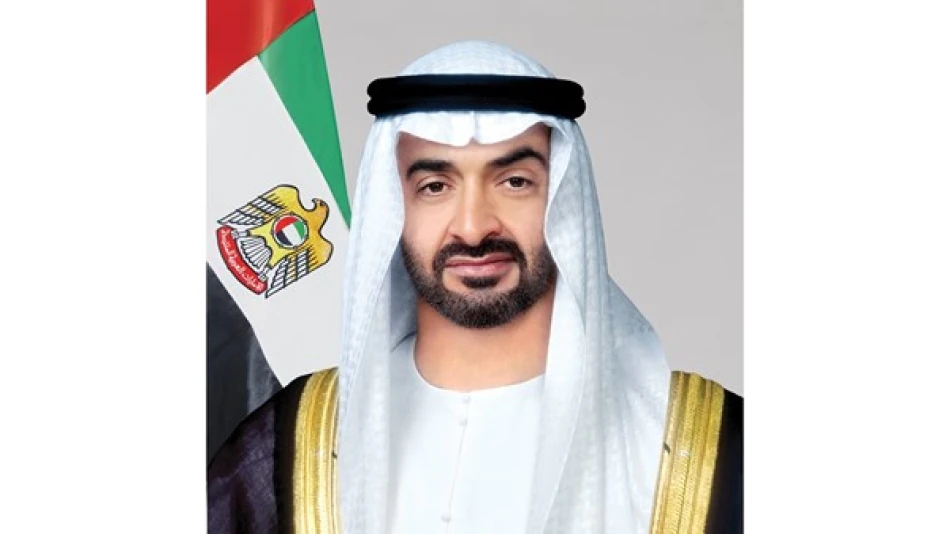
UAE President and Turkish President Witness Signing of Bilateral Agreements
 Layla Al Mansoori
UAE and Turkey Forge Strategic Partnership with Seven Key Investment Agreements
The UAE and Turkey have significantly deepened their bilateral ties through a comprehensive package of seven agreements spanning defense, pharmaceuticals, agriculture, and tourism during Sheikh Mohamed bin Zayed Al Nahyan's state visit to Ankara. The deals signal both nations' commitment to diversifying their economies and reducing dependence on traditional energy sectors while strengthening regional cooperation amid shifting Middle Eastern dynamics.
Strategic Sectors Drive New Partnership Framework
The agreements signed at the Turkish Presidential Palace cover critical areas including classified information sharing, pharmaceutical manufacturing cooperation, food and agriculture investment, tourism development, industrial collaboration, and polar research initiatives. A joint consular committee will also be established to facilitate business and diplomatic exchanges.
The pharmaceutical cooperation agreement stands out as particularly significant, given Turkey's established generic drug manufacturing capabilities and the UAE's push to become a regional healthcare hub. This partnership could create supply chain efficiencies and reduce import dependencies for both nations.
Economic Diversification at the Core
These agreements reflect broader economic strategies in both countries. The UAE continues its ambitious diversification away from oil revenues, targeting sectors like advanced manufacturing, biotechnology, and sustainable agriculture. Turkey, meanwhile, seeks foreign investment to support its industrial base and address currency pressures.
The industrial cooperation memorandum could prove especially valuable for Turkish manufacturers seeking access to Gulf markets, while UAE investors gain entry to Turkey's strategic position bridging Europe, Asia, and the Middle East.
Regional Implications and Timing
The timing of this partnership expansion is notable, coming as both nations navigate complex regional relationships. Turkey has been rebuilding ties with Gulf states after years of tension, while the UAE has pursued pragmatic diplomacy across the region.
The defense-related classified information sharing agreement suggests deeper security cooperation, potentially extending beyond economic partnerships. This could enhance intelligence sharing on regional threats and contribute to stability in an increasingly volatile neighborhood.
Investment Climate and Market Opportunities
For investors, these agreements open new avenues in sectors previously constrained by regulatory barriers. The tourism and hospitality memorandum could accelerate UAE investment in Turkey's recovering tourism sector, while agricultural cooperation may boost food security initiatives crucial for both nations.
The establishment of formal investment frameworks reduces regulatory uncertainty and provides clearer pathways for capital deployment. This institutional approach mirrors successful economic partnerships the UAE has developed with other regional powers, suggesting a template for sustained growth rather than opportunistic deals.
Long-term Strategic Value
Beyond immediate economic benefits, these agreements represent a strategic realignment in Middle Eastern partnerships. Both nations are positioning themselves as stable, business-friendly destinations in an uncertain regional environment. The polar research cooperation, while seemingly niche, demonstrates the breadth of collaboration and shared commitment to scientific advancement.
The high-level participation from both sides—including UAE's Minister of Industry and Advanced Technology Sultan Al Jaber and Turkey's Defense Minister Yaşar Güler—signals genuine political commitment to implementation rather than symbolic gestures.