UAE Leads Middle East in Electronic Trade Volume of Financial Derivatives
 Layla Al Mansoori
The UAE now handles more than half of all electronic derivatives trading in the Middle East, with trading volumes exceeding $576.5 billion. This makes the country a global fintech capital, driven by its young digital-savvy population, advanced regulatory framework, and widespread smartphone adoption.
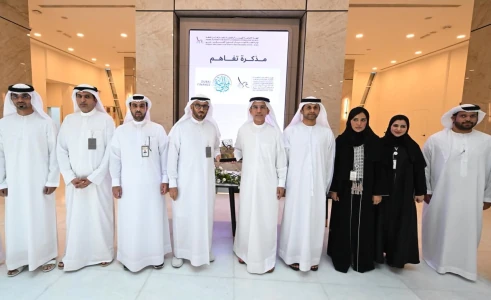
Tariq Shabib, CEO of Capital.com for the Middle East and North Africa, shared these findings during Abu Dhabi Finance Week 2025. The data comes from a comprehensive study his company conducted on regional trading patterns.
Here's what makes this interesting: 45% of Middle Eastern traders start with demo accounts to learn the ropes, compared to just 32% in Europe. This shows people here take financial education seriously before risking real money.
The numbers reveal a wealthy, educated trading base. About 86% of regional traders are between 18 and 44 years old, with millennials making up 55% of active users. University graduates represent 64% of traders in the region versus 39% in Europe. Income levels are notably higher too - four times more traders earn over $200,000 annually compared to Europeans. The region also has ten times more clients with deposits exceeding $1 million over two years.
Since Capital.com got its license from the UAE Securities and Commodities Authority in April 2024, the Middle East and North Africa became the company's fastest-growing market. The UAE alone accounts for more than half of the platform's global trading volumes.
The company's first-half 2025 trading volumes hit $1.5 trillion, up 42.5% from the second half of 2024. Regional trading reached $804.1 billion, a 53.3% increase, with the UAE contributing $576.5 billion of that total.
But there's a catch. While Middle Eastern traders achieve higher win rates (48.6% versus 43.8% in Europe), fewer actually make net profits. The problem? Poor risk management. Traders here prefer short-term strategies, closing 71% of their positions the same day compared to 41% in Europe.
Popular assets include gold, oil, natural gas, major stock indices, and cryptocurrencies. The UAE's regulatory framework allows contracts for difference (CFDs), which let traders access global assets without owning them directly. These are high-risk instruments that require proper education and risk management tools.
Shabib points to several factors behind the UAE's success: government initiatives building a competitive digital economy, growth-friendly legislation, world-class infrastructure, and growing financial awareness. There's also strong appetite from individual traders to participate responsibly in global economic opportunities.
The challenge now is turning enthusiasm into sustainable profits. "Uncontrolled boldness can become overconfidence," Shabib explained. "Risk management is the biggest gap we see. Education and financial awareness are the solution."
His company is focusing on AI-powered educational tools to promote responsible trading and transform regional ambition into long-term financial empowerment. For the UAE, this represents another step in its journey to become a global financial technology hub.