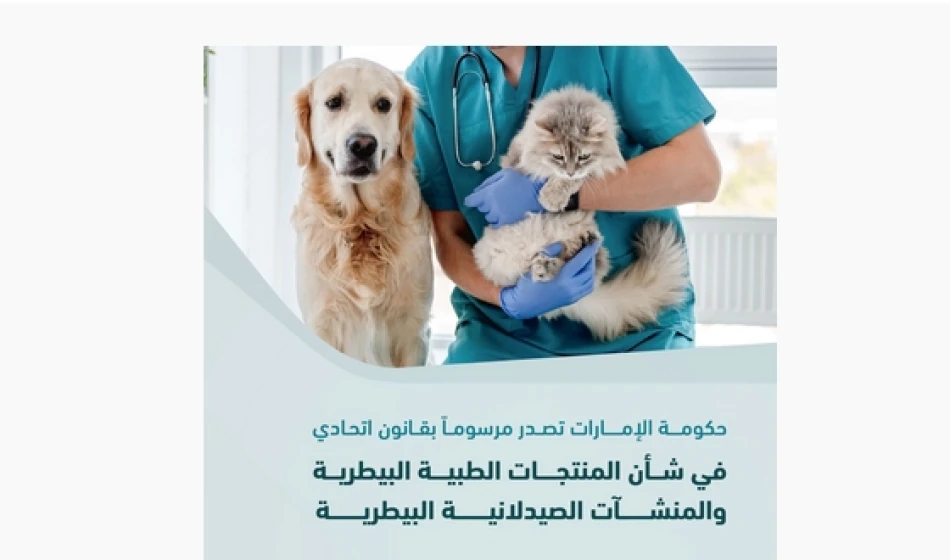
UAE government issues federal decree on veterinary medical products and veterinary pharmaceutical facilities.
 Layla Al Mansoori
The UAE government issued a comprehensive federal law governing veterinary medical products and pharmaceutical facilities, marking a significant step toward protecting animal health, food safety, and public health. The new regulation creates a unified framework for developing, manufacturing, and distributing veterinary medicines while establishing strict controls over prohibited substances and counterfeit products.
The law covers a broad range of veterinary medical products, including biological preparations, veterinary supplements for injection, raw veterinary materials, complementary veterinary products, and genetically modified organisms for veterinary use. It also addresses controlled substances and chemical precursors used in veterinary medicine.
For the first time, the regulation allows pharmaceutical manufacturers to share excipients, solvents, preservatives, and carrier materials between veterinary medical product factories or contract companies under specific guidelines. This change could reduce production costs and improve supply chain efficiency across the industry.
The law introduces strict prescription controls, particularly for veterinary antibiotics. Only licensed veterinarians can prescribe or modify veterinary prescriptions, and antibiotics cannot be dispensed without a prescription or used for preventive purposes, immunity enhancement, or growth stimulation. This addresses growing concerns about antibiotic resistance in both animals and humans.
A new fast-track approval pathway has been created for innovative veterinary medical products with therapeutic importance. This streamlined process maintains quality, safety, and efficacy requirements while aligning with international agreements, potentially speeding up access to critical treatments.
The regulation establishes comprehensive rules for importing veterinary medicines for personal use. People entering or leaving the UAE cannot bring these products unless they're unavailable locally and have no equivalent alternatives, and only with prior approval from the Emirates Drug Establishment.
The law covers all types of veterinary pharmaceutical facilities, including veterinary pharmacies, warehouses, manufacturing plants, marketing offices, pharmaceutical consulting offices, laboratories, and research centers. Both the Emirates Drug Establishment and the Ministry of Climate Change and Environment will oversee licensing, each within their respective jurisdictions.
A national pharmacovigilance system will monitor the safety of veterinary medical products and reduce adverse side effects. This system gives authorities the power to ban imports, halt distribution, suspend, recall, or withdraw veterinary medical products nationwide when safety concerns arise.
The government is emphasizing investment in the veterinary pharmaceutical industry to support innovation and development, contributing to industrial sector growth and sustainable economic development. The law also standardizes rules for creating and managing national databases for veterinary medical products and pharmaceutical facilities.
Companies and individuals covered by this law have up to one year from its implementation date to comply with the new requirements. The Cabinet can extend this grace period if needed. The regulation includes disciplinary measures and deterrent penalties for violations, with oversight committees established across relevant government agencies.