UAE Emerges as Global Hub for Fintech and e-Transactions
 Omar Rahman
The UAE has become the world's fintech capital, capturing $500 billion in electronic trading volumes — more than half of all trading activity across the Middle East and North Africa. This massive growth is being driven by a digitally-savvy generation that's changing how the region approaches financial markets.
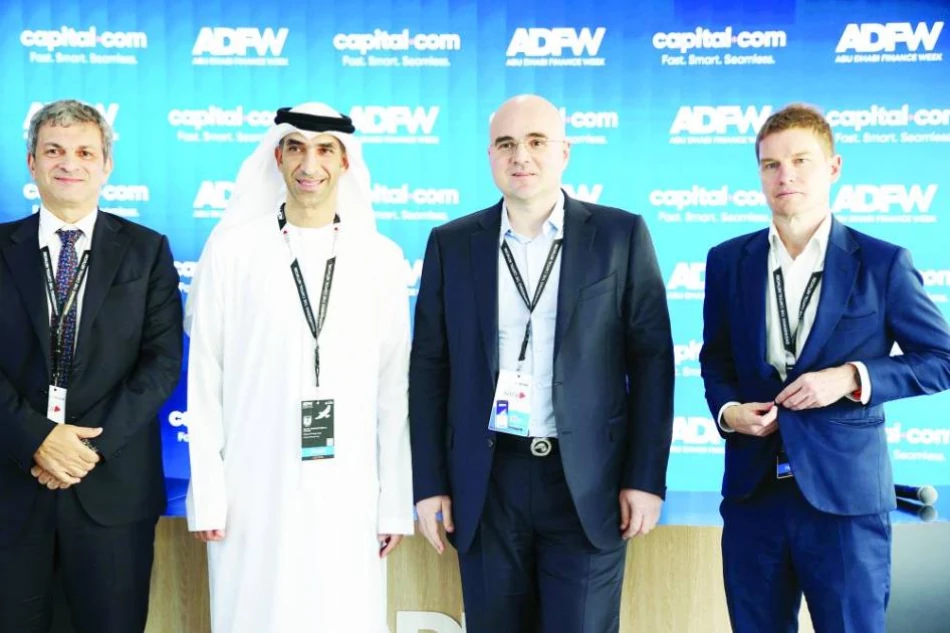
Dr. Thani bin Ahmed Al Zeyoudi, UAE's Minister of Foreign Trade, revealed these findings during Abu Dhabi Finance Week. The data comes from a comprehensive study by Capital.com and strategic consulting firm APCO, which tracked 62,850 active traders who executed 85.5 million trades over two years.
Since Capital.com received its license from the UAE's Securities and Commodities Authority in April 2024, the Middle East and North Africa region has become the company's fastest-growing market. The region now accounts for more than half of Capital.com's global trading volumes.
The numbers are striking. Capital.com's trading volumes hit $1.5 trillion in the first half of 2025, up 42.5% from the previous six months. The Middle East drove this growth with $804.1 billion in trades — a 53.3% increase. The UAE alone accounted for $576.5 billion of that total.
Several factors explain this boom. The UAE offers advanced regulatory frameworks, high-speed internet, and widespread smartphone adoption. The Securities and Commodities Authority allows trading in contracts for difference (CFDs), which let traders access global financial assets without owning them directly. But these are high-risk instruments that require proper education and risk management tools.
Al Zeyoudi emphasized that this performance reflects the UAE's commitment to building a competitive digital economy. The country combines world-class infrastructure with growth-friendly regulations and increasing financial literacy to help individual traders participate responsibly in global markets.
"The Middle East is experiencing a pivotal moment in its financial development, especially the UAE," said Viktor Prokopenya, founder of Capital.com. "Digital finance is opening unprecedented doors to global markets and changing how people trade, invest, and build wealth."
The demographic data reveals interesting patterns. About 86% of regional traders are between 18 and 44 years old, with millennials making up 55% of active users. The region's traders are also well-educated — 64% have university degrees compared to just 39% in Europe. They also earn higher incomes on average.
Learning by doing is common here. Some 45% of regional traders start with demo accounts, compared to 32% in Europe. This shows growing interest in financial education before risking real money.
Regional traders are notably active and prefer short-term strategies. They close 71% of their trades within the same day, compared to 41% in Europe. This aggressive trading style makes risk management education even more important.
"Risk management is the biggest gap we see, and education plus increased financial awareness is the solution," said Tariq Shabib, CEO of Capital.com for the Middle East and North Africa.
The study concludes that building financial literacy remains crucial for the region's continued growth. AI-powered educational tools and responsible trading practices will help transform enthusiasm and ambition into long-term financial empowerment. But the foundation is already there — strong regulation, advanced technology, and a young, educated population ready to engage with global markets.