UAE Eases Hardships for Displaced Gazans During Winter
 Layla Al Mansoori
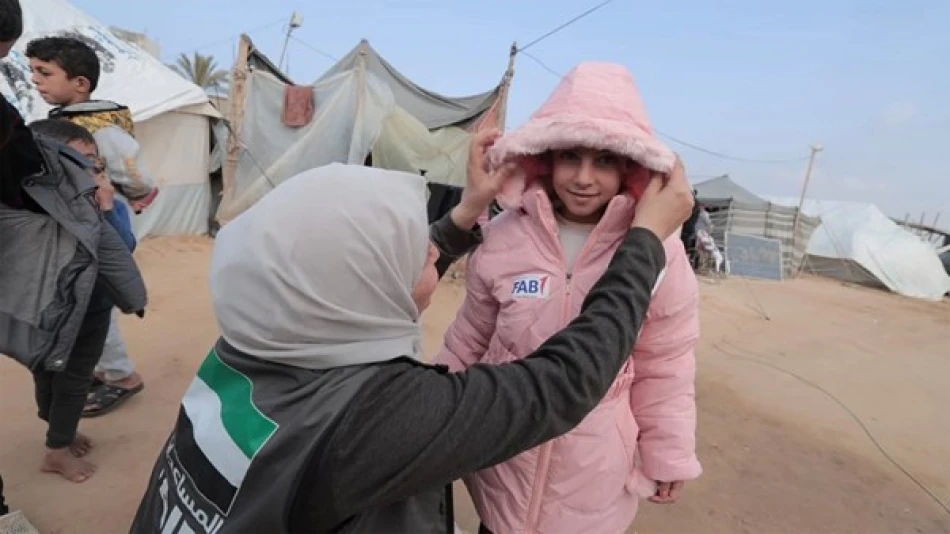
UAE relief teams from "Operation Gallant Knight 3" are working across Gaza to deliver emergency aid as heavy rains and freezing temperatures worsen conditions for Palestinian families living in deteriorating tents. The operation is distributing relief packages, tents, and basic shelter supplies to help families survive the harsh winter weather.
The timing couldn't be more critical. Gaza's displaced population is facing a double crisis - the ongoing humanitarian emergency combined with severe winter weather that's making life in temporary shelters nearly impossible. Many families are living in makeshift tents that offer little protection against rain and cold.
Operation Gallant Knight 3 has become the largest relief effort currently operating in Gaza. The UAE teams are focusing on immediate needs - getting waterproof tents, warm clothing, and basic supplies to families before conditions get worse. It's practical aid that addresses the most urgent problems people face right now.
Displaced residents in Gaza have praised the UAE's quick response to their deteriorating situation. They've specifically highlighted how the relief teams recognized the weather emergency and moved fast to get essential supplies to those who need them most.
What makes this significant
This operation shows how humanitarian aid can adapt quickly to changing conditions on the ground. The UAE's approach here is about maintaining a constant presence rather than one-off deliveries. Their teams are staying in Gaza to monitor conditions and respond immediately when new problems emerge.
For the broader Middle East, this represents continued Gulf state involvement in Palestinian humanitarian issues. The UAE has positioned itself as a key provider of practical aid, focusing on immediate relief rather than political solutions.
The operation also demonstrates how weather events can rapidly escalate humanitarian crises. What was already a difficult situation became an emergency when winter weather hit families living in inadequate shelter. This pattern is likely to repeat in other conflict zones where displaced populations lack proper housing.