UAE and US Discuss Urgent Ceasefire to End Sudanese Conflict
 Sara Khaled
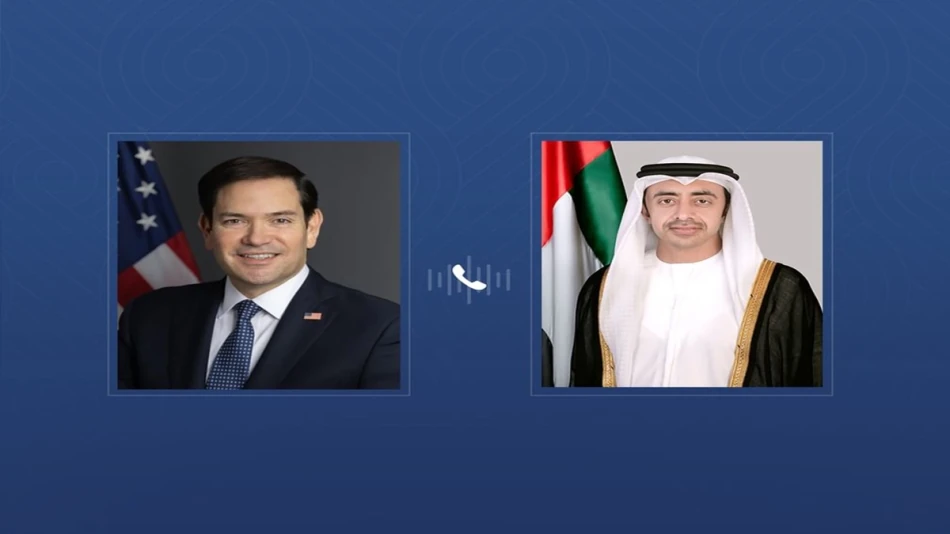
UAE Foreign Minister Sheikh Abdullah bin Zayed Al Nahyan spoke with US Secretary of State Marco Rubio in a call that covered two major regional crises and a significant tech trade development. The conversation focused on the civil wars in Sudan and Gaza, while also addressing the White House's recent decision to allow advanced AI semiconductor exports to UAE's G42 group.
The two officials discussed the ongoing civil war in Sudan, which has been raging for more than two years. Sheikh Abdullah welcomed President Trump's recent statements calling for an end to what he described as horrific attacks against civilians. Both ministers agreed on the need for an immediate, unconditional ceasefire and unobstructed humanitarian aid delivery to civilians caught in the conflict.
The Gaza situation also featured prominently in their discussion. They talked about the establishment of a "Peace Council" following the UN Security Council's adoption of Resolution 2803, which was proposed by the United States. Sheikh Abdullah emphasized support for Trump's comprehensive plan to end the Gaza conflict, aiming for security, stability, and sustainable prosperity across the entire region.
But the call wasn't just about crisis management. Sheikh Abdullah made sure to thank President Trump for a recent White House decision that could reshape UAE's position in the global AI race. The US approved exports of advanced AI semiconductors to G42, the UAE's major artificial intelligence company.
This semiconductor approval matters more than it might seem at first glance. Advanced AI chips have become crucial tools for countries wanting to build their own AI capabilities. The US has been selective about who gets access to these chips, making the UAE approval a sign of strong bilateral ties.
For the UAE, this decision supports its broader strategy to become a regional tech hub. G42 has been positioning itself as a key player in AI development across the Middle East. Access to cutting-edge US semiconductors gives the company - and by extension, the UAE - better tools to compete in the global AI market.
The timing is significant too. As the new Trump administration sets its foreign policy priorities, this call shows the UAE maintaining its role as a key US partner in the Middle East. The combination of crisis diplomacy and tech cooperation reflects how modern diplomatic relationships work across multiple sectors simultaneously.
Sheikh Abdullah stressed that the semiconductor decision demonstrates the depth of strategic relations between the two countries and their continued growth across various levels. This suggests both nations see the relationship extending well beyond traditional diplomatic and security cooperation into emerging technology sectors.