Syria's Future Belongs to All Components, Syrians Poised for Peace and Unity
 Sara Khaled
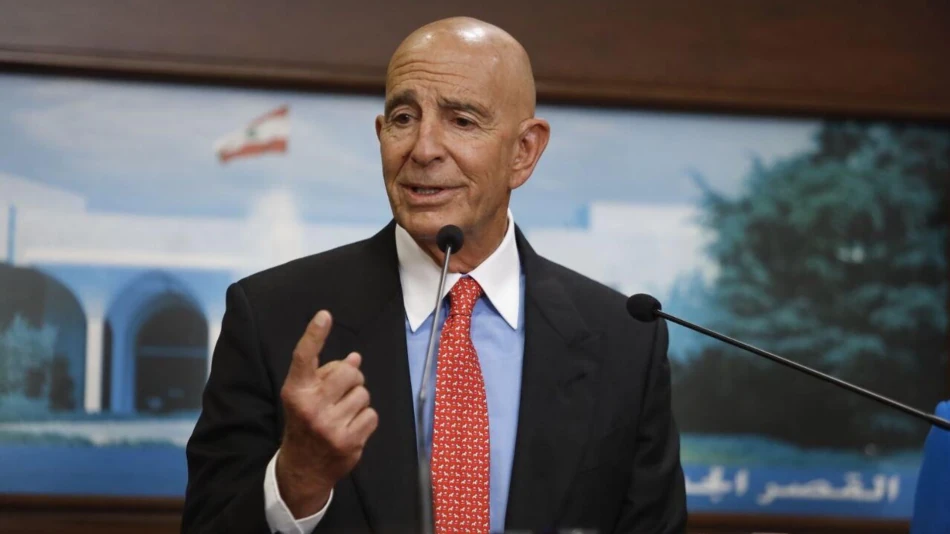
The US envoy to Syria says the country has achieved "epic and heroic" progress in just one year since Assad's fall, but warns against imposing Western expectations that could derail Syria's path to stability. Tom Barak's comments at the Doha Forum signal a more hands-off American approach to Syria's reconstruction.
Speaking at the Qatar forum, Barak emphasized that Syria's future belongs to all its communities. He said Syrians now have a real chance for peace, unity, and prosperity after overthrowing Bashar al-Assad's regime in December 2024.
The American diplomat stressed that the international community should help Syrians secure their rights and encourage them to build the kind of inclusive government they want. But he warned against repeating historical mistakes.
"Since Sykes-Picot, almost every decision the West imposed on the region instead of letting it develop naturally was wrong," Barak said. He pointed to Libya and Iraq as examples where Western intervention created more problems than solutions.
This marks a significant shift in US thinking about Middle East involvement. The Sykes-Picot agreement of 1916 carved up Ottoman territories between Britain and France, creating artificial borders that many blame for ongoing regional conflicts. Barak's reference suggests Washington recognizes how colonial-style interventions have backfired.
The timing matters for investors and regional powers watching Syria's reconstruction. With the country potentially opening up after years of sanctions and isolation, there's growing interest in who will shape its economic future. Barak's hands-off approach could mean more space for regional players like Turkey and Gulf states to take the lead.
On the Syrian-Israeli border situation, Barak said resolution requires "small steps" - suggesting no quick fixes are expected. This cautious approach reflects the complex security challenges still facing the new Syrian leadership.
Barak, who also serves as US ambassador to Turkey, praised both Turkey and Qatar for their role in securing the Gaza ceasefire. This highlights how regional powers are increasingly taking charge of Middle Eastern diplomacy, while the US steps back from its traditional dominant role.