Sudanese Rapid Support Forces Announce 3-Month Humanitarian Ceasefire
 Sara Khaled
Sudan's Rapid Support Forces announced a unilateral three-month humanitarian ceasefire on Monday, just after army chief Abdel Fattah al-Burhan rejected an international ceasefire proposal. The move highlights the deepening divide between Sudan's warring factions as the conflict drags on.
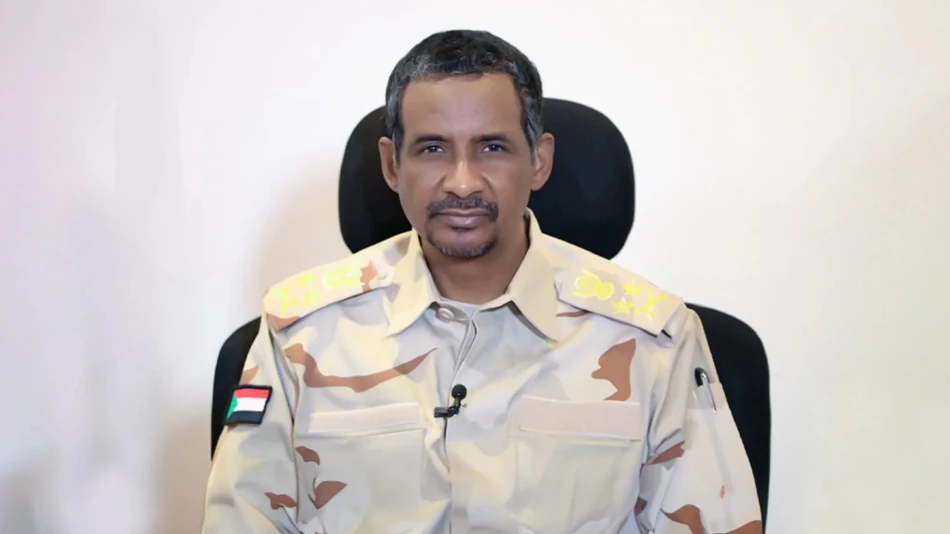
RSF commander Mohamed Hamdan Dagalo said his forces would "facilitate humanitarian work and allow relief and medical teams to reach areas to ease the suffering of Sudanese people." He made the announcement in a recorded statement, positioning his paramilitary group as the more cooperative party in potential peace talks.
But Dagalo also struck a harder tone on accountability. "Justice will take its course according to international law, and no violator will escape punishment," he said. This suggests the RSF sees itself winning not just militarily but also in the court of international opinion.
The RSF leader called on the "Quartet countries" - likely referring to the US, UK, Norway, and Saudi Arabia - to pressure the Sudanese army to accept the humanitarian pause. This appeal shows how both sides are trying to win international backing as the war continues.
Here's what makes this significant: unilateral ceasefires rarely hold without buy-in from all parties. The army's rejection of international mediation efforts suggests Burhan's forces believe they can still achieve their goals through military means. Meanwhile, the RSF's public ceasefire offer could be a tactical move to gain international legitimacy while potentially regrouping forces.
For Sudan's 45 million people, this latest diplomatic maneuvering offers little immediate relief. Previous ceasefire agreements have collapsed within days or weeks. The real test will be whether humanitarian aid can actually reach desperate civilians in contested areas, regardless of what either side promises.