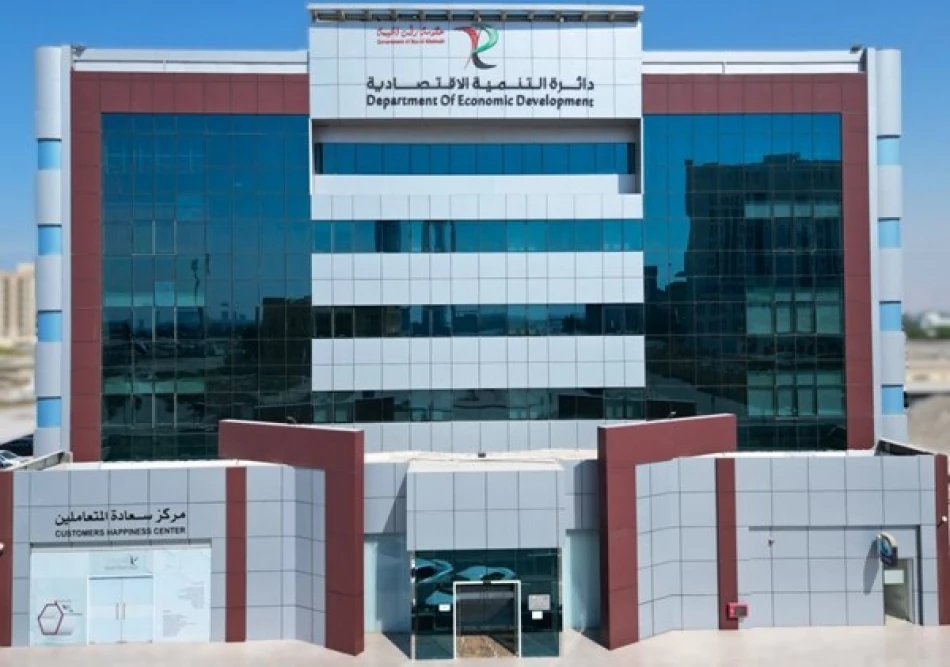
Ras Al Khaimah's Registered Business Licenses Reach AED 10.2 Billion in Capital
 Layla Al Mansoori
Ras Al Khaimah's Business Boom: Industrial Licenses Surge 111% as Emirate Emerges as UAE's Manufacturing Hub
Ras Al Khaimah is experiencing a dramatic business expansion, with total capital of active licenses jumping 14.5% to AED 10.2 billion in the first half of 2025. The northern emirate's industrial sector is leading the charge with new industrial licenses skyrocketing 111%, signaling a strategic shift toward manufacturing and value-added industries that could reshape the UAE's economic landscape beyond oil and tourism.
Manufacturing Renaissance Drives Growth
The Ras Al Khaimah Economic Development Department's latest report reveals a striking transformation in the emirate's business composition. While overall license numbers grew a solid 6%, the quality and scale of new ventures tell a more compelling story. Industrial licenses dominated growth at 14.3%, followed by professional services at 6% and commercial activities at 5%.
This industrial surge isn't merely statistical—it represents a fundamental economic pivot. New industrial licenses alone grew by an extraordinary 111%, while their combined capital increased 6.7-fold to AED 47.5 million. This suggests larger, more capital-intensive manufacturing operations are choosing Ras Al Khaimah over traditional industrial hubs.
Strategic Positioning Against Regional Competition
Ras Al Khaimah's manufacturing push mirrors successful strategies employed by Singapore and parts of China, where smaller territories leveraged streamlined regulations and strategic incentives to attract industrial investment. Unlike Dubai's focus on services and Abu Dhabi's energy dominance, Ras Al Khaimah appears to be carving out a manufacturing niche within the UAE federation.
The emirate's proximity to major shipping routes, combined with lower operational costs compared to Dubai and Abu Dhabi, creates a compelling value proposition for manufacturers seeking Middle Eastern production bases. This positioning becomes particularly relevant as global supply chains continue reshoring and "friend-shoring" operations closer to end markets.
Capital Intensity Signals Quality Growth
The 7.5% increase in new license capital to AED 495 million, while impressive, masks more significant sectoral shifts. Professional services capital surged 40%, indicating higher-value service businesses are establishing regional headquarters or expanding operations in the emirate.
Amina Qahtan, Director of Commercial Affairs at the Economic Development Department, attributes this growth to leadership directives and streamlined business procedures. However, the numbers suggest deeper structural advantages are at play—likely including competitive licensing fees, expedited approvals, and sector-specific incentives.
Investor Implications and Market Dynamics
For investors and multinational corporations, Ras Al Khaimah's emergence as an industrial hub presents both opportunities and strategic considerations. The emirate's rapid licensing growth indicates strong government support and infrastructure development, but also suggests increasing competition for prime industrial real estate and skilled labor.
The 111% jump in industrial licenses could strain existing infrastructure and labor markets, potentially driving up operational costs. Early movers may benefit from current incentives and lower costs, while later entrants might face premium pricing for land and facilities.
Regional Economic Rebalancing
This industrial boom reflects broader UAE economic diversification efforts, with each emirate developing specialized competitive advantages. Ras Al Khaimah's manufacturing focus complements Dubai's logistics and financial services strength and Abu Dhabi's energy and sovereign wealth management capabilities.
The sustained 14.5% capital growth rate, if maintained, would double the emirate's business capital base within five years. Such expansion could transform Ras Al Khaimah from the UAE's smallest economy into a significant regional manufacturing center, potentially rivaling established industrial zones in Sharjah and Dubai South.
The real test will be whether this rapid licensing growth translates into operational businesses, job creation, and sustainable economic output—metrics that will determine if Ras Al Khaimah's industrial ambitions become lasting economic transformation.