Qatar PM Warns: Gaza Talks at Crucial Stage, Ceasefire Incomplete
 Sara Khaled
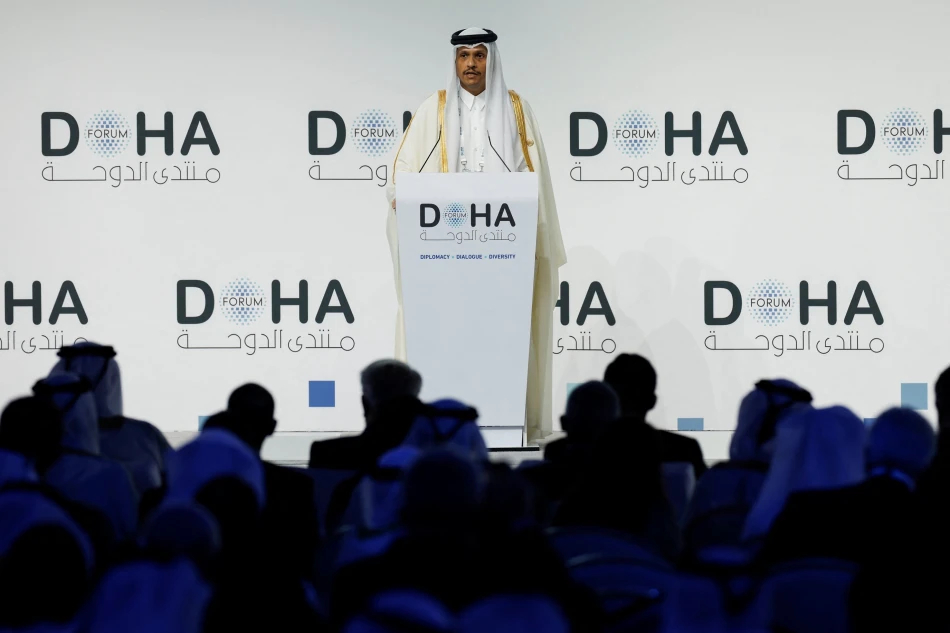
Qatar's Prime Minister Sheikh Mohammed bin Abdulrahman Al Thani said Gaza ceasefire negotiations have reached a critical stage, warning that current efforts represent only a temporary pause rather than a complete end to hostilities. Speaking at the Doha Forum, he emphasized that mediating countries are working together to move into the next phase of the ceasefire agreement.
The Qatari leader was blunt about the current situation. "We are at a critical moment. We have not achieved the goal yet. So what we just did is merely a temporary halt," he said during Saturday's discussion panel. Violence has decreased but hasn't stopped since the Gaza ceasefire took effect on October 10.
Sheikh Mohammed outlined what a real ceasefire would require. "We cannot consider it a ceasefire yet. A ceasefire cannot be complete without full withdrawal of Israeli forces, return of stability to Gaza, and enabling residents to enter and exit freely - and this is not the case today."
Four key players are driving the mediation efforts. Qatar, Turkey, Egypt, and the United States - the sponsors of the current truce - are meeting to push forward the next phase of the plan. But the Qatari Prime Minister made clear this is just the beginning. "This phase is merely a temporary stage from our perspective."
The focus is shifting toward longer-term solutions. "If we are just solving what happened in the past two years, this is not sufficient," Sheikh Mohammed said, calling for "a sustainable solution that achieves justice for both peoples."
Behind-the-scenes diplomacy continues at high levels. Egyptian Foreign Minister Badr Abdelatty met with the Qatari Prime Minister on the forum's sidelines to discuss the ceasefire implementation. Cairo announced that their talks covered field developments in Gaza and emphasized the need to implement all phases of what they called the Sharm el-Sheikh peace agreement.
The Egyptian Foreign Ministry said both officials stressed the importance of quickly forming an international stabilization force and enabling it to carry out its mandate. This suggests mediators are already planning post-ceasefire arrangements, even as they work to solidify the current fragile pause in fighting.