New Signings Reignite Al-Nassr's Title Hopes, But Experts Warn of Defensive Weaknesses
 Sara Khaled
Al-Nasr's Summer Rebuild: Attacking Firepower Can't Mask Defensive Vulnerabilities
UAE football club Al-Nasr has completed an ambitious summer overhaul with 11 new signings, but former players and analysts warn that defensive weaknesses could undermine the team's championship aspirations despite impressive attacking reinforcements. The club's failure to address a backline that conceded 45 goals last season may prove costly in their bid to return to title contention.
Star-Studded Signings Signal Championship Ambition
Al-Nasr's summer spending spree brought in notable international talent, headlined by Iranian winger Mehdi Ghaedi, Brazilian striker Jonatas Santos, and Serbian midfielder Luka Milivojevic. The club also secured Ivorian defender Cheikna Doumbia and winger Solomon Suso, alongside promising local talents including Zayed Al-Zaabi, Salem Sultan, and Mohammed Abdul Basit.
This recruitment drive represents Al-Nasr's most significant investment in recent years, signaling serious intent to challenge for domestic honors after disappointing campaigns. The emphasis on attacking players suggests a tactical shift toward more aggressive, possession-based football under new management.
Expert Analysis: Quality Additions with Critical Gaps
Midfield Transformation Shows Promise
Former Al-Nasr technical director Khalid Obaid praised the strategic thinking behind key signings, particularly highlighting Ghaedi's pace and creativity. "Ghaedi is technically gifted and extremely fast, capable of playing on the left wing or cutting inside," Obaid explained. "He has good vision for creating chances, though he's not physically imposing."
The addition of local midfielder Mohammed Abdul Basit provides defensive coverage and link-up play, potentially forming an effective partnership with foreign reinforcements. This combination could address Al-Nasr's previous struggles with midfield balance and creativity.
Defensive Concerns Remain Unaddressed
Despite the attacking upgrades, former players unanimously identified defensive reinforcement as the missing piece. Last season's 45 goals conceded represents a damaging statistic for any team with championship ambitions—a rate that typically relegates clubs rather than elevates them to title contention.
"Any team wanting to compete for trophies needs clear balance between defense and attack," emphasized former player Hassan Suhail. The club still requires a commanding center-back, reliable fullbacks, and potentially a new goalkeeper to complement their offensive investments.
Regional Context: Learning from Gulf Football Evolution
Al-Nasr's approach mirrors successful models across Gulf football, where clubs like Al-Hilal and Al-Ittihad have combined international star power with local talent development. However, the most successful teams in the region have prioritized defensive stability alongside attacking flair—a lesson Al-Nasr appears to have overlooked.
The UAE Pro League's increasing competitiveness demands tactical flexibility and squad depth. Quick transitions and physical intensity characterize modern Emirati football, requiring players who can adapt to varying match tempos and tactical approaches.
Coaching Challenge: Maximizing Investment Returns
Serbian coach Yokanovic faces the complex task of integrating multiple new players while establishing a cohesive tactical identity. Former national team captain Abdulrahman Mohammed noted that "we're waiting to see his technical approach on the field, as its characteristics haven't appeared yet."
Success will depend on rapid player integration and tactical flexibility. The coach must balance individual talents within a collective system while addressing the team's defensive vulnerabilities through improved organization and positioning.
Season Outlook: Ambitious Goals Meet Realistic Constraints
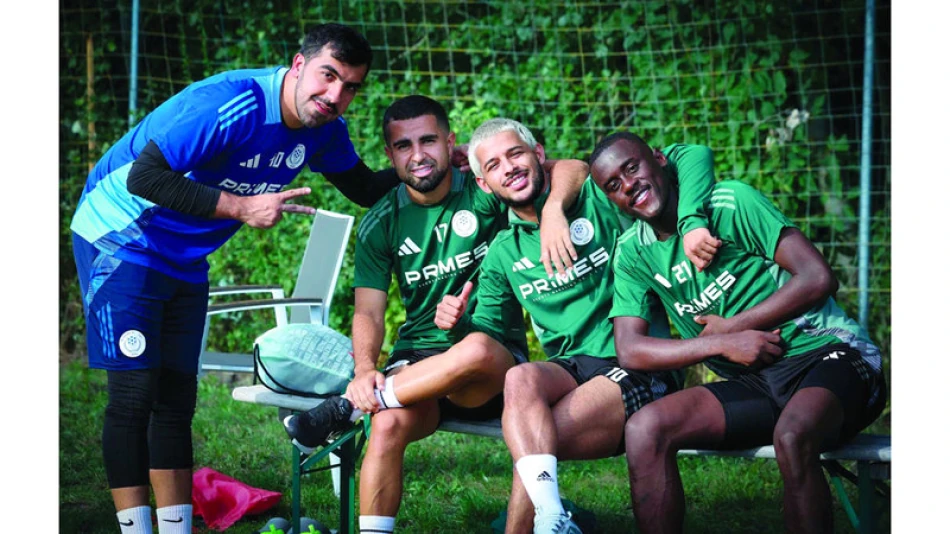
Al-Nasr's pre-season performances offer mixed signals—impressive attacking displays in friendlies contrast with underlying structural concerns. The team's 7-1 victory over Czech side Dynamo Ceske Budejovice showcased their offensive potential, while defensive lapses in other matches highlighted persistent weaknesses.
The club opens their league campaign against Ittihad Kalba on August 16, followed by fixtures against Ajman and Al-Bataeh. These early matches will provide crucial indicators of whether Al-Nasr's investment strategy can translate into competitive success.
While the attacking reinforcements represent significant progress, championship contention likely requires additional defensive investment. Al-Nasr has built an exciting foundation, but structural gaps may limit their ceiling in what promises to be a highly competitive season.