Mohamed Ben Sulayem Reelected as FIA President, Driving Global Motorsport Innovation
 Sara Khaled
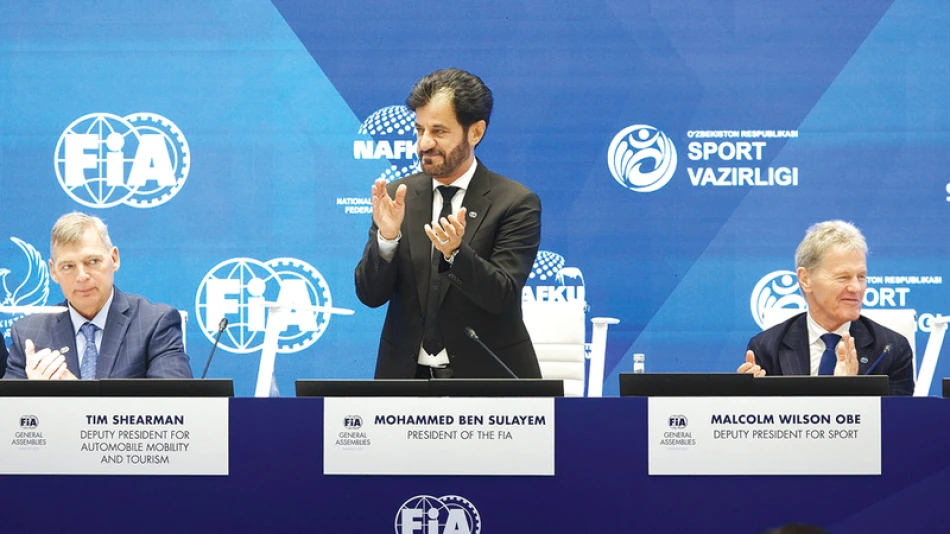
Mohammed Ben Sulayem has been re-elected as president of the FIA, the global governing body for motorsport and mobility organizations worldwide. His victory in Tashkent, Uzbekistan, secures him a second four-year term leading the organization that oversees Formula 1 and other major racing series.
Ben Sulayem first took charge of the FIA in 2021 during a turbulent period for the organization. His initial term focused heavily on internal reforms and financial stability. The results speak for themselves - the FIA transformed a €24 million loss in 2021 into a €4.7 million operating profit in 2024, marking the organization's strongest financial performance in about a decade.
The turnaround wasn't just about cutting costs. The FIA implemented sweeping institutional reforms that improved governance structures, strengthened external auditing processes, and enhanced financial discipline across all departments. These changes boosted transparency and accountability throughout the organization.
For the motorsport industry, this financial stability means more consistent investment in member clubs and strategic programs worldwide. The FIA projects another €4.4 million operating profit for 2025, showing the improvements aren't just a one-time fix.
"We have overcome many challenges, but today, together, we are stronger than ever," Ben Sulayem said after his re-election. The Emirati official emphasized his commitment to continuing improvements across motorsport and mobility sectors.
The financial recovery matters beyond just balance sheets. A stable FIA can better support racing series development, safety initiatives, and sustainable mobility programs. For teams, drivers, and racing organizations worldwide, this means more predictable governance and potentially increased investment in the sport's future.
Ben Sulayem's second term will likely focus on building upon these foundational reforms while addressing new challenges facing motorsport, including sustainability pressures and the ongoing evolution of automotive technology.