Meteoric Marvels: UAE's Stunning Celestial Phenomenon Captivates Stargazers
 Sara Khaled
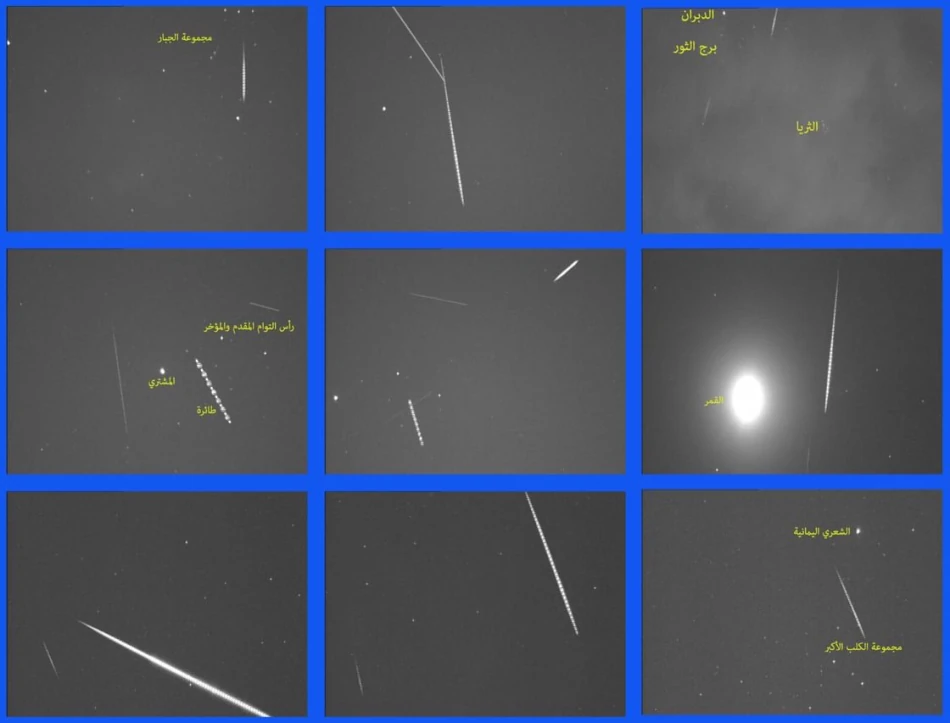
The UAE's meteor and fireball monitoring network captured over 2,000 images during a single night, documenting spectacular activity from the Geminids meteor shower as it lit up the country's skies. The network successfully mapped the orbital paths of 401 meteors, providing valuable data about cosmic dust particles before they entered Earth's atmosphere.
Engineer Mohammed Shawkat Odeh, director of the International Astronomy Center and member of the International Meteor Organization, explained how this detailed tracking works. The network can determine the exact orbital elements of dust particles that were circling the sun before they collided with our atmosphere and became visible meteors.
Here's what makes this data collection possible: the same meteor must be photographed from multiple stations simultaneously. The network uses triangulation calculations to map each meteor's path with precision. Without this multi-station approach, scientists couldn't create these detailed orbital maps.
The UAE's monitoring system operates completely automatically. Three stations spread across Abu Dhabi's desert each house 17 high-sensitivity video cameras designed to detect extremely faint meteors – some as dim as magnitude 6.5, which is barely visible to the naked eye.
After capturing footage, the stations automatically analyze the images to determine each meteor's path and brightness. This data then gets sent to an astronomical center in the United States as part of an international collaboration between the International Astronomy Center and similar global networks, overseen by NASA.
The night's photography session captured more than just meteors. Images showed prominent constellations including Orion, Taurus, Gemini, and Canis Major, plus the Pleiades star cluster. Jupiter and the Moon also appeared in the frames, along with some aircraft. Several images even caught multiple meteors in a single 8-second exposure.
This type of systematic meteor monitoring helps scientists understand the composition and origins of cosmic debris entering our atmosphere. The Geminids, one of the year's most reliable meteor showers, typically peak in mid-December and are known for producing bright, colorful streaks across the sky.