Jebel Jais Registers Lowest Temperature in the UAE: Discover the Chilly Charm of the Nation's Highest Peak
 Layla Al Mansoori
UAE Records Unusually High Minimum Temperature as Climate Patterns Shift
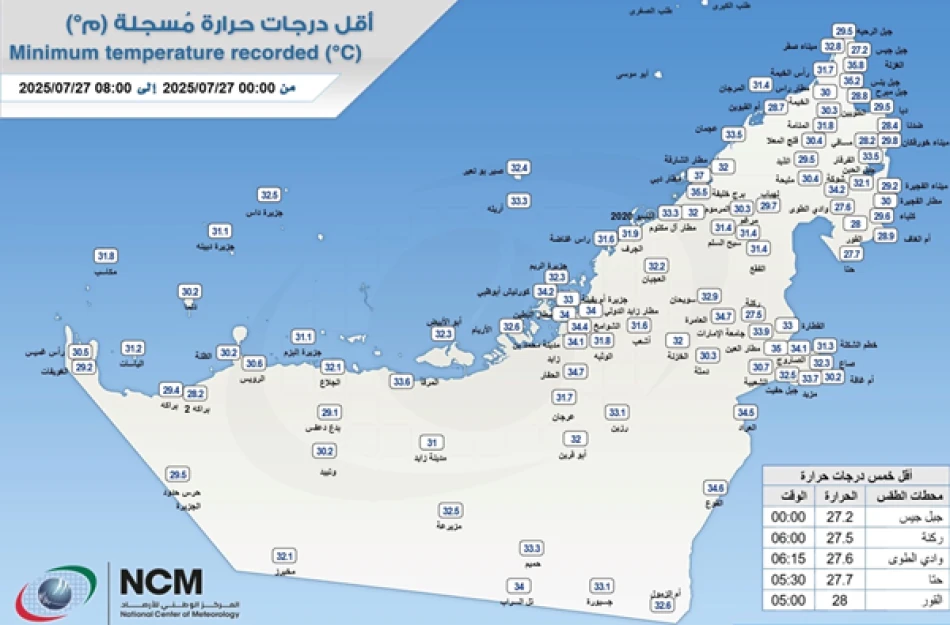
The UAE's lowest recorded temperature on Sunday reached 27.2°C (81°F) at Jebel Jais mountain in Ras Al Khaimah, highlighting the country's increasingly warm climate patterns even in traditionally cooler highland areas. This temperature reading, taken at midnight local time, underscores the persistent heat affecting the Gulf region during what should be cooler overnight hours.
Mountain Peak Fails to Provide Traditional Relief
Jebel Jais, the UAE's highest peak at 1,934 meters above sea level, typically serves as the country's coolest refuge. The mountain, located in the Hajar range near the Omani border, usually experiences temperatures several degrees lower than coastal areas due to its elevation. However, Sunday's minimum temperature of 27.2°C demonstrates how even the country's most elevated terrain is experiencing sustained warmth.
The National Center of Meteorology's measurement, taken at the stroke of midnight when temperatures typically reach their daily low, reflects broader regional climate trends affecting the Arabian Peninsula.
Regional Context and Climate Implications
Gulf-Wide Temperature Patterns
The UAE's temperature readings align with similar patterns across Gulf Cooperation Council countries, where minimum temperatures have been consistently elevated throughout 2024. Saudi Arabia, Kuwait, and Qatar have reported comparable overnight temperature floors, suggesting a regional climatic shift rather than an isolated phenomenon.
These sustained high minimum temperatures indicate reduced nighttime cooling, a trend that impacts energy consumption patterns and urban heat island effects in rapidly developing Gulf cities.
Economic and Infrastructure Considerations
Persistent high temperatures strain the UAE's energy grid, with cooling demands remaining elevated even during traditionally cooler overnight hours. This pattern affects utility companies and drives increased investment in renewable energy infrastructure, particularly solar projects that can offset daytime peak demand.
The tourism sector, particularly adventure tourism centered around Jebel Jais, may need to adapt marketing strategies as the mountain's appeal as a cool retreat diminishes during certain periods of the year.
Broader Climate Monitoring Significance
The National Center of Meteorology's regular temperature reporting serves as crucial data for climate researchers tracking long-term trends in the Middle East. The UAE's comprehensive weather monitoring network, which includes stations across diverse terrain from coastal areas to mountainous regions, provides valuable insights into microclimate variations within the small but geographically diverse nation.
These measurements contribute to regional climate models that inform everything from urban planning decisions to agricultural strategies across the Gulf region, where traditional farming and water management practices face increasing pressure from changing temperature patterns.