Iraqi Prime Minister's Coalition Secures Landslide Victory in Elections
 Layla Al Mansoori
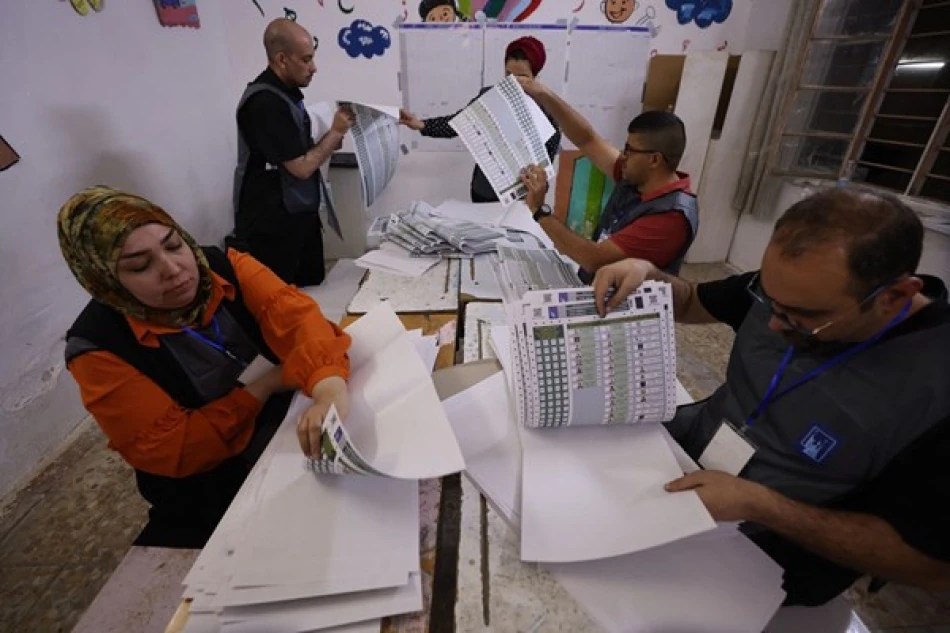
Iraqi Prime Minister Mohammed Shia al-Sudani's coalition appears to have won big in Tuesday's parliamentary elections, with sources claiming his Development and Reconstruction bloc secured around 50 seats or more. This could make it the largest parliamentary bloc, positioning al-Sudani to potentially keep his job as the country's leader.
Sources close to al-Sudani's alliance say the Development and Reconstruction bloc achieved a "very significant victory" in the elections. Two other sources familiar with the coalition confirmed it likely captured the largest share of parliamentary seats, possibly reaching or exceeding 50 seats out of the total.
The Independent High Electoral Commission is expected to announce preliminary results later Wednesday evening.
Iraqi voters turned out in surprisingly high numbers on Tuesday, with participation reaching over 55 percent. This marks a dramatic jump from the previous 2021 elections, which saw just 41 percent turnout - the lowest in Iraq's modern electoral history.
The higher participation rate suggests Iraqis may be more engaged with the political process than in recent years, when widespread protests and disillusionment with the government had dampened voter enthusiasm.
Here's how Iraq's government formation works: Once the new parliament convenes, it will select a president. That president then tasks the candidate from the "largest parliamentary bloc" with forming a government, according to the constitution. Since no single party typically wins an outright majority, coalitions must negotiate with allies to become the largest bloc and choose the next prime minister.
Al-Sudani's strong showing puts him in a favorable position for these post-election negotiations. But the final results will determine whether his coalition can maintain its lead and secure enough allies to form the next government.
The elections come as Iraq continues to grapple with economic challenges, security concerns, and political instability that has marked much of the post-2003 period. The new parliament will face pressure to address corruption, improve public services, and manage the country's complex relationships with both the United States and Iran.