Guinea-Bissau's Military Seizes Power in Coup d'État
 Layla Al Mansoori
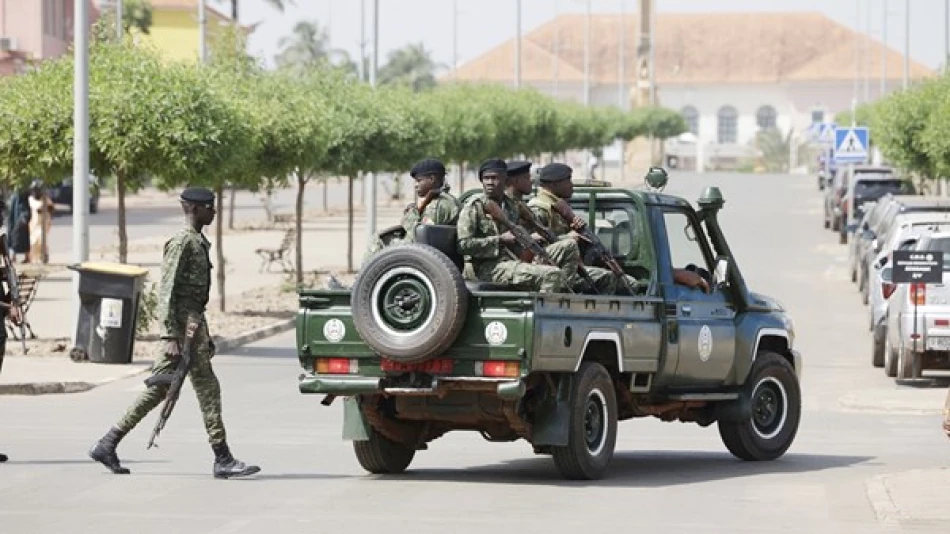
Military officers in Guinea-Bissau seized power Wednesday night, just hours before election officials were set to announce preliminary results from the country's presidential election. The coup leaders removed President Umaro Sissoco Embaló from office, suspended the electoral process, and closed the country's borders while imposing a nationwide curfew.
The officers announced the formation of a "Supreme Military Command for the Restoration of Order" through a statement broadcast on state television. This new military body will run the West African nation until further notice. They also shut down the borders and put a curfew in place across the country.
Embaló, who later confirmed his removal in a television interview, was trying to become the first president in three decades to win a second consecutive term in Guinea-Bissau. His spokesperson, António Iaia Djedj, said unknown gunmen attacked the electoral commission to prevent the announcement of voting results.
The timing wasn't coincidental. Election results were supposed to come out Thursday, and Embaló's chances looked uncertain. His removal came at the exact moment when the country would learn whether he'd secured another term.
Guinea-Bissau has been stuck in a cycle of political instability since gaining independence from Portugal in 1974. The country has experienced at least nine coups and coup attempts between 1974 and 2020, when Embaló first took office. Even during his presidency, Embaló said he survived three separate coup attempts.
This latest military takeover adds Guinea-Bissau to a growing list of West African countries where armies have grabbed power in recent years. The region has seen a wave of military coups, with soldiers citing corruption and poor governance as reasons for removing civilian leaders.
For investors and regional partners, this creates more uncertainty in an already unstable region. Guinea-Bissau's economy relies heavily on cashew nut exports and foreign aid. The country also sits along key drug trafficking routes between South America and Europe, which has historically fueled corruption and instability.
The coup puts additional pressure on regional bodies like the Economic Community of West African States, which has been trying to restore civilian rule in other countries where militaries have taken control.