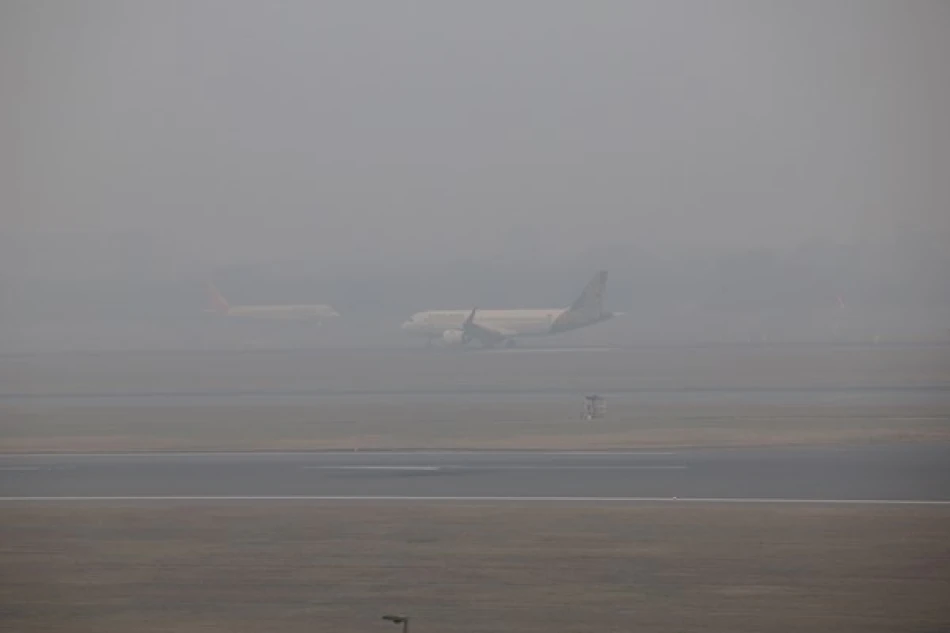
Flights Disrupted at Delhi Airport After Volcanic Eruption in Ethiopia Impacts India
 Layla Al Mansoori
A volcanic eruption in Ethiopia has disrupted air travel across India, forcing airlines to cancel at least 7 international flights and delay more than 10 others at Delhi airport on Tuesday. The ash clouds from Mount Halebi Gobi volcano are now drifting toward western India, creating headaches for travelers and airlines alike.
Indian Airlines alone scrapped 13 flights since Monday as the ash plume spreads across the region. The volcano, which had been dormant for years, suddenly came to life early Sunday morning in Ethiopia's Afar region, sending thick clouds of ash across the Red Sea.
Here's what happened: Mount Halebi Gobi erupted Sunday morning, immediately blanketing the nearby village of Afdera in ash and dust. Ethiopian authorities confirmed the eruption Monday, while France's Toulouse Volcanic Ash Advisory Center tracked the ash clouds through satellite imagery.
The timing couldn't be worse for India's aviation sector, which handles millions of passengers during peak travel periods. Volcanic ash poses serious risks to aircraft engines and can cause them to fail mid-flight, so airlines have no choice but to ground planes or reroute flights when ash clouds appear.
For passengers, this means more delays and cancellations are likely as the ash clouds continue moving west. Airlines typically don't offer compensation for volcanic disruptions since they're considered "acts of nature," leaving travelers to cover extra hotel and meal costs themselves.
The last major volcanic disruption to global air travel was Iceland's Eyjafjallajökull eruption in 2010, which grounded flights across Europe for weeks and cost airlines billions. While this Ethiopian eruption appears smaller in scale, it shows how quickly volcanic activity can ripple across international flight networks thousands of miles away.