Emirati-Uzbek Ties Surpass Traditional Cooperation, Says Qirqawai
 Sara Khaled
Uzbekistan launched an ambitious plan to eliminate government bureaucracy and train 5 million citizens in AI skills, with the UAE serving as a strategic partner. The initiative marks a significant shift from traditional administrative processes to flexible, forward-thinking government services that put citizens first.
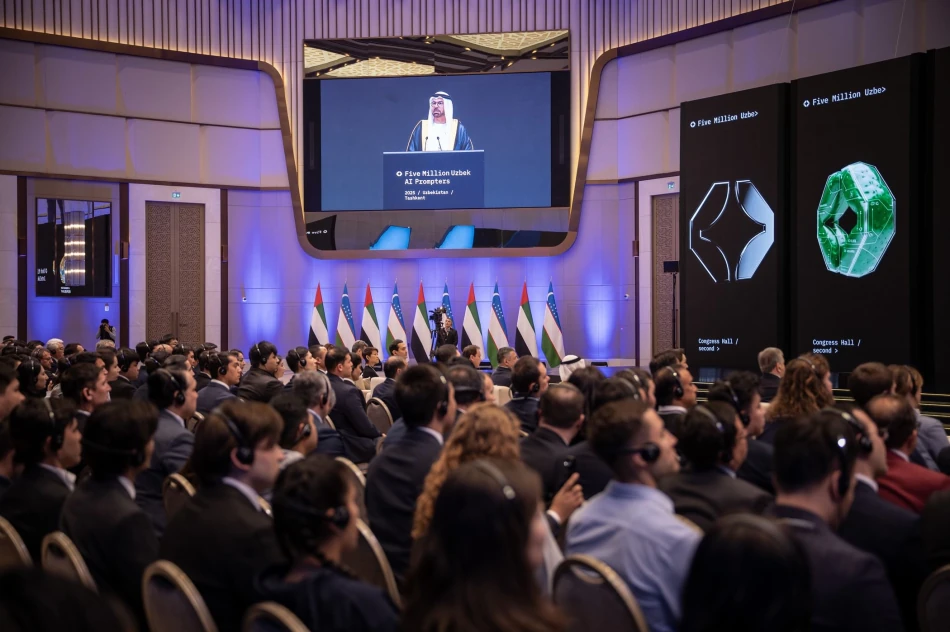
President Shavkat Mirziyoyev of Uzbekistan witnessed the launch of both programs at forums in Tashkent, alongside UAE Minister of Cabinet Affairs Mohammed Abdullah Al Gergawi. The "Zero Bureaucracy" program draws directly from the UAE's successful model of streamlining government operations and boosting citizen satisfaction.
The AI initiative aims to train 5 million Uzbeks in AI prompt engineering over three years. This represents one of the most ambitious national AI training programs globally, designed to build specialized skills that can drive economic growth and innovation across the country.
Al Gergawi highlighted how the partnership between the two nations has evolved beyond traditional cooperation into what he called an "intellectual and humanitarian partnership." The relationship focuses on sharing expertise and building more flexible, innovative governments that prioritize human needs.
The forums brought together ministers and senior officials from both countries to share best practices in eliminating bureaucracy and developing AI solutions for government work. The UAE delegation included officials from energy, justice, finance, health services, and AI sectors, while Uzbekistan was represented by Prime Minister Abdulla Aripov and Senate Speaker Tanzila Narbayeva.
For investors and tech companies, this partnership signals growing opportunities in Central Asia's digital transformation. Uzbekistan's commitment to training millions in AI skills creates a potential talent pool that could attract international businesses looking for skilled workers in emerging markets.
The UAE-Uzbekistan strategic partnership began in 2019 and was renewed in 2021 for six years. The current phase from 2023 to 2026 covers 14 areas including industrial development, digital transformation, healthcare, AI, and urban planning. This comprehensive approach supports Uzbekistan's Vision 2040 development goals.
Both programs reflect a broader trend where developing nations are adopting digital-first approaches to governance. By eliminating bureaucratic barriers and building AI capabilities simultaneously, Uzbekistan positions itself to compete in the global digital economy while improving citizen services.
The scale of the AI training initiative is particularly noteworthy. Training 5 million people represents roughly 15% of Uzbekistan's population, suggesting the government sees AI literacy as essential for economic competitiveness. This could serve as a model for other countries looking to rapidly build national AI capabilities.