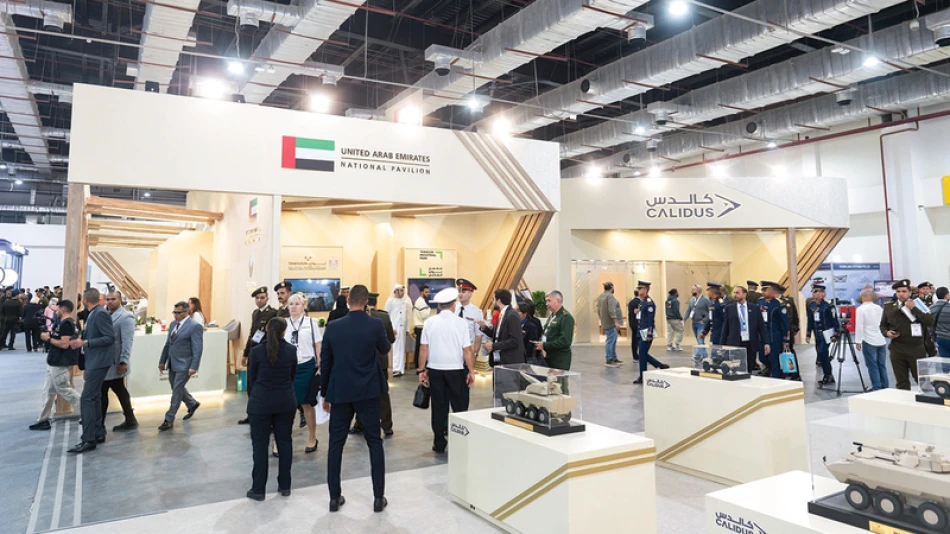
Emirati Pavilion at Egypt's Defense Expo Captivates Global Delegations and Companies
 Sara Khaled
The UAE's national pavilion dominated the second day of Egypt's fourth Defense Exhibition, drawing high-level delegations from multiple countries and global defense companies. The pavilion, spanning over 1,000 square meters, showcased cutting-edge defense systems from leading Emirati companies and sparked serious discussions about future partnerships.
The UAE pavilion stands as the largest international presence at the exhibition. It's organized by ADNEC Group with backing from the UAE Ministry of Defense and the Defense Capabilities Empowerment Council (Tawazun). The space houses major players including Tawazun, EDGE Group, Calidus Holdings, GAL, AMRK, Al Jundi Magazine, and the upcoming IDEX and NAVDEX 2027 exhibitions.
High-ranking military officials from Bahrain, Kuwait, Russia, Egypt, and Djibouti visited the pavilion on day two. These weren't just courtesy visits - the delegations engaged in detailed discussions about defense cooperation and technology partnerships. The presence of such diverse international representation shows how the UAE has positioned itself as a serious player in global defense markets.
Emirati companies held bilateral meetings with senior Egyptian military leaders to explore cooperation opportunities in defense and advanced technology sectors. These talks reflect the deeper strategic relationship between the two countries, which goes beyond simple trade deals to encompass technology transfer and joint development projects.
The pavilion's success highlights the UAE's growing influence in the defense industry. The country has invested heavily in developing domestic defense capabilities over the past decade, moving from being primarily an arms importer to becoming a significant exporter of military technology. This shift matters because it gives the UAE more leverage in regional security discussions and creates new revenue streams for its economy.
For defense contractors and governments watching this space, the UAE's approach offers a blueprint for how smaller nations can build substantial defense industries. The country has combined strategic partnerships with international companies, significant government investment, and a focus on emerging technologies like drones and cyber warfare systems.
The strong media attention and visitor interest at the pavilion also demonstrates how defense exhibitions have become key venues for international diplomacy and business development. These events now serve as informal summits where military leaders can discuss regional security challenges while exploring commercial opportunities.